



Give us this day our daily bread. If only.
Recently a short Facebook reel was posted on a Union Against Hunger (UAH) WhatsApp group interviewing two women who had been arrested for shoplifting. The products of their theft were still in their hands. A few toiletries, some Oxo cubes, Pritt.
As food and fuel prices rise inexorably, I wondered how many people wake up every day worrying where the next meal will come from; facing this cruel choice. Steal or starve?
A 2023 article in the Daily Maverick suggests this wretched choice is a plight that faces thousands of people. This week, when I asked Nicro for updated information their CEO, Betzi Pierce, responded:
- Theft is one of the most common offences among Nicro clients, with 1,846 cases recorded nationally in 2025/26. This was almost 20% of all the cases they deal with;
- Of all theft‑related cases, 43% involved food items. This makes food the single-most frequently stolen category by a significant margin;
- Other basic necessities also feature prominently: cosmetics (17%), clothing (8%), toiletries (4%), medicine (3%) and baby formula (1%); and
- The demographic profile of affected clients reflects broader structural inequality: 76% are Black, 74% are male and 43% are unemployed, with a further 17% being students.
Pierce concluded “These patterns strongly suggest that many theft incidents are linked to poverty, hunger and the struggle to maintain dignity. The data shows a clear trend: a large proportion of theft cases involve essential goods, particularly food, which aligns with your concern that rising food prices are pushing vulnerable people into survival‑driven petty theft.”
What is the look in a hungry child’s eyes? What are the words she utters that express the desire for satisfying food?
As far as I know, major retailers do not publish cumulative figures on loss to in-store theft.
The SAPS, however, do categorise shoplifting among the many other crimes our country is bedevilled by. According to the SAPS Crime Statistics about 40,000 cases a year are specifically recorded as “shoplifting”. But the number of people who get caught, arrested and charged is probably just the tip of the iceberg.
From this we can only surmise the agony faced by otherwise law-abiding citizens, brought up in God-fearing families, who are forced to consider theft as one way of feeding a child.
What is the look in a hungry child’s eyes? What are the words she utters that express the desire for satisfying food?
What is the level of anxiety in the minds of parents as each day they confront the question: how to put adequate food on the table?
Is each day literally a struggle for survival?
Unemployment is a hunger crisis
In South Africa tens of millions of people are condemned to involuntary unemployment: 28 million now receive meagre social grants, including nine million on the monthly R370 Social Relief of Distress (SRD) Grant.
Millions more eke out a living earning very low wages in precarious employment. Speak to a Checkers Sixty60 delivery driver if you want to know how hard work, long hours and low remuneration feels.
The bottom line is this: if you don’t work you don’t eat.
And if you don’t earn much, you don’t eat much.
Proof of the pudding is in the not eating
Every month the Pietermaritzburg Economic Justice and Dignity project (PEJD) tracks food prices through the hands-on experience of a representative sample of women shoppers who price common items. According to the PEJD’s Household Affordability Index, the cost of a monthly Household Food Basket is currently R5,401.44. They distinguish this from a nutritionally adequate basket which costs R6,460 per month – R1,000 more.
Read the PEJD’s submission to the SA Human Rights Commission National Inquiry into Food Systems in South Africa here.
They show how the gap between the value of social grants and the lower rungs of a nutritionally adequate food basket is hundreds of rands. Affordability is why millions of people confront food shortages daily.
In this context, what choices do poor people face?
I posed this question to members of the UAH. These were some of the responses:
“Hungry children are torture to mothers. These were the words that mothers used in the Black Sash Report on Hunger and Social Assistance.”
“Poverty strips people of their dignity. Humiliates them and we judge the person and not the drivers of poverty and the beneficiaries of poverty.”
“Picture staring in the eyes of your hungry child or children, it’s indeed torture 😒”
“Vangate Mall had so many shoplifting by women. At Athlone Magistrate Court, the Callas Foundation supported many of them by advocating for non-custodial measures. Our reports and advocacy assisted these women not to end up with criminal records.”
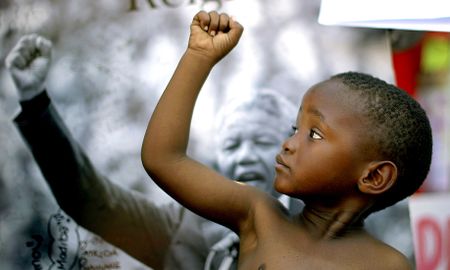
When stealing becomes a necessity
The daily indignities and anxieties of hunger occur in the context of a constitutional right of everyone to “sufficient food and water” and of “every child to basic nutrition”.
But the disjuncture between the promise and the reality is hard on an empty stomach.
But it’s a moral question as much as it is a legal one. It’s also surely a question for each of us about what we tolerate as a society.
The proof of commitment to fighting inequality is not in the amount of hot air you can generate, but what you do in your own backyard.
On the one hand, we have the major food retailers, like Shoprite Checkers, raking in oversized profits of billions of rands per annum and paying their executives a King’s Fortune. Pieter Engelbrecht, the CEO of Shoprite, is reported to earn a salary of more than R87-million per annum.
On the other hand, parents are unable to feed their children, contributing to a crisis of malnutrition that drives epidemics of stunting and obesity and leads to more than 10,000 infant deaths a year.
Join the dots…
Coming back to shoplifting.
Asking these questions brought to mind the applicability of the well-established legal defence of “necessity” for breaking the law. The principle is that where the state fails to protect you from an imminent threat, or when it’s a matter of self-defence, when there are no other means available to you, breaking the law may be justified.
Stealing out of necessity when you are hungry seems to fit this definition.
In this context I am seeking advice on the merits of instituting a class action to acquit and free the thousands of poverty-stricken people currently charged with shoplifting, where the theft involved nothing other than basic foodstuffs and other life essentials.
As the old adage goes, “better to break the law than break the poor”.
May 28 is World Hunger Day. The moral and legal issues that surround mass hunger should no longer be avoided in South Africa.
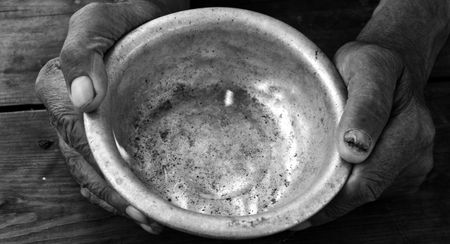
Access to food is one of the most egregious manifestations of inequality. Our President, Cyril Ramaphosa, has become a global champion of the fight against inequality. In April he addressed the consultative conference of the International Panel on Inequality at Wits University. He called for “all of us to act, to act together and to act with great urgency” adding:
“At a domestic level, countries need to be investing in the education and health of their people, prioritising the needs of the poorest and most vulnerable. They need to provide quality public goods and services that improve living conditions and create opportunities.”
But the proof of commitment to fighting inequality is not in the amount of hot air you can generate, but what you do in your own backyard.
I stood up and pointed out the hunger numbers.
He knows because we told him.
It’s time the President acted. DM
Comments
Scroll down to load comments...