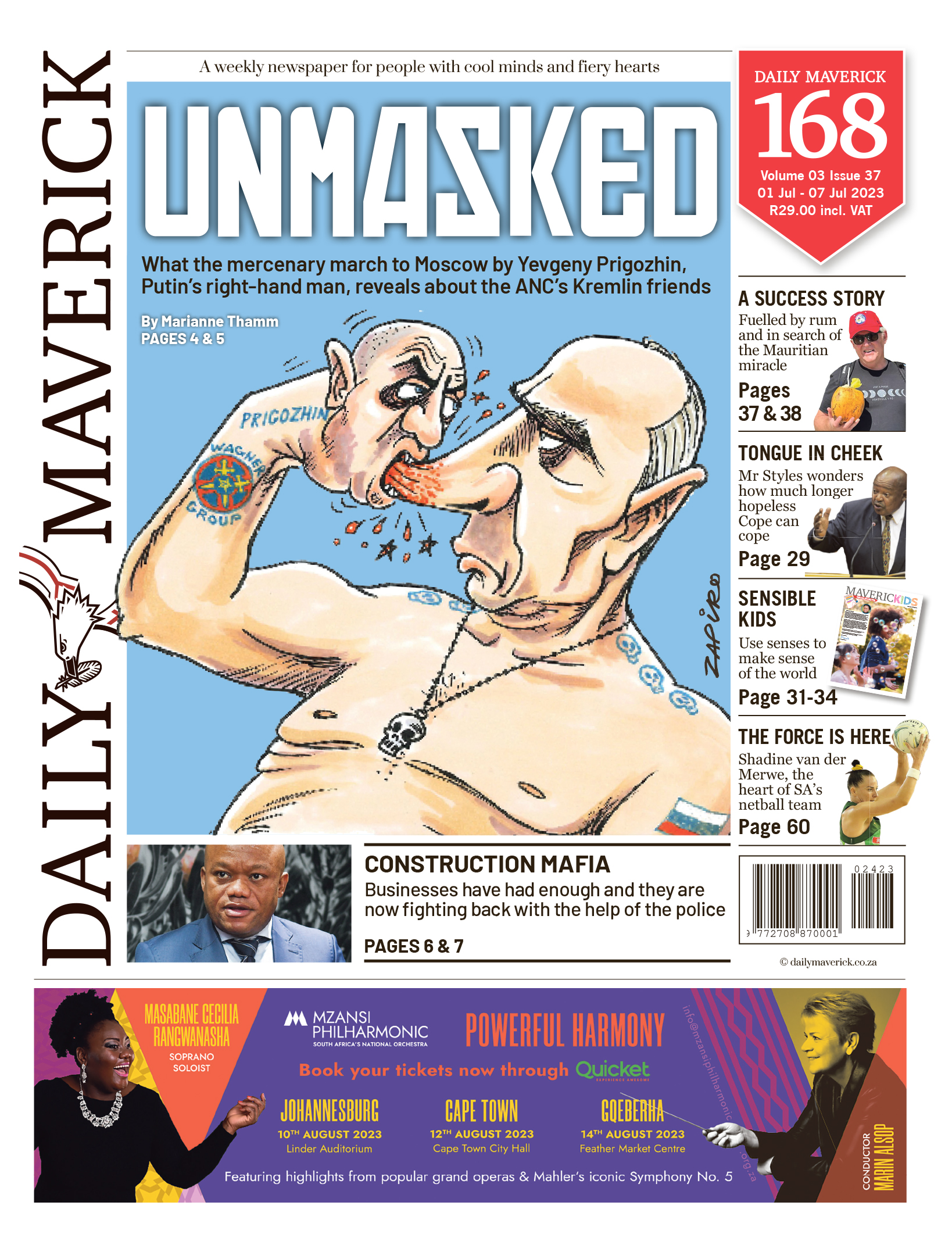
As escalating geopolitical tensions exploded when Russia invaded Ukraine early in 2022, a large chunk of the South African commentariat adopted an emotionally intense and uncritical pro-Western position.
Suddenly, the West was the home of democracy and human rights, and anyone who didn’t line up behind the West was complicit in supporting authoritarian regimes. The national conversation was rapidly poisoned by this fervour and many people began to self-censor.
In this climate, nuance has become rare, and our media sometimes seem more like a social media pile-on than a space for careful reflection. However, those of us with the privilege of adding our two cents’ worth to the national debate are morally obliged to resist mob psychology and think more carefully. We need to insist that one can, and in fact should, be deeply critical of the West without being a patsy for its enemies. We need to understand that the world is complex and that a government can be terrible in one respect but better in another.
Take the ANC, for instance. Its outrageous levels of corruption, repression and incompetence have devastated South Africa and must be condemned in the strongest possible terms. But this does not mean that everything the ANC has done in office has been disastrous.
The efforts of uncritical cheerleaders for the West to paint the ANC’s typically inept attempt to chart an independent non-aligned course as being nothing but a result of corruption – of funding to the party from a Russian billionaire – are deeply insulting.
A more equitable order
Whatever the ANC’s flaws, it cannot be denied that the party has its roots in African nationalism and that there is a strong current in the party genuinely committed to a more equitable international order.
Foreign Affairs Minister Naledi Pandor clearly speaks from a place of integrity when she insists that South Africa should not become a lapdog of the West. A commitment to peace and democracy means taking a nonaligned position in the current geopolitical conflicts.
The shrill moralism of the uncritically pro-West lobby is preventing us from understanding the complexities. One of the issues that now seems difficult to engage rationally is BRICS. Any sense that a commentator may see potential benefits in BRICS is shouted down as immoral complicity in authoritarianism and warmongering.
But we all know that Western countries such as the US and the UK back many viciously authoritarian states and have attacked many countries since the end of World War 2. When people say they are for democracy and peace but don’t seem bothered by this, it is clear that what they are actually for is white, Western control of the world.
The majority of the BRICS members are authoritarian states, and only Brazil has an elected leadership that is in any sense progressive. If support for BRICS was about copying the forms of government that we see in India, China or Russia, it would be fair to say that support for BRICS is support for authoritarianism.
But this is not what the vast majority of people who have welcomed BRICS – and its imminent expansion – want. For most of them, its possible benefits centre on the end of the unipolar Western dominance of the world since 1990. This dominance has reinforced highly unequal global economic and political relations and resulted in the US and its allies waging illegal wars, staging coups and sanctioning countries that don’t accept its authority. Countries such as Cuba, Haiti, Iraq, Palestine and many, many others have been devastated by the West.
Overwhelming economic and political power
If the West did not have such overwhelming economic and political power, it would not have been able to get away with crimes against humanity, such as the destruction of Iraq. The only way to reduce the power of the West is for other countries to build working economic and political alliances.
The moves under way to break away from the dollar as the sole global currency are, in fact, hugely encouraging. To argue that this is potentially valuable for the majority of humankind who have been oppressed by the West for centuries is not to claim that the leadership of countries such as Russia and India is anything other than appalling.
It is simply to say that, for a country like South Africa, and for most countries outside the West, a multipolar world will enable more room to manoeuvre in economic and political terms and reduce the capacity of the US to isolate or even devastate countries that don’t follow its line.
When people are fearful of free and open discussion, all we are left with is shrieking and sometimes clearly racialised moralism rather than actual evidenced-based discussion and debate. We need to do better. There are real issues on the table that require real discussion. DM
This story first appeared in our weekly Daily Maverick 168 newspaper, which is available countrywide for R29.