



 Civil society and the sugar industry voice concerns about the Health Promotion Levy before the delivery of the mini-budget. (Photo: iStock)
Civil society organisations have urged Finance Minister Enoch Godongwana to address the Health Promotion Levy in the upcoming Medium-Term Budget Policy Statement (the mini budget), to be delivered to the National Assembly on Wednesday, 21 October.
The Health Promotion Levy, a tax paid by manufacturers on sugar-sweetened beverages like sodas, was introduced in 2018 to reduce consumption of sugar-sweetened beverages and ultimately decrease rates of obesity and non-communicable diseases such as diabetes. The levy has not been increased since 2019, while South Africa’s rate of obesity and non-communicable diseases continues to increase.
The levy is charged at 2.21c per gram of sugar content above the threshold of 4g per 100ml. It now raises sugar-sweetened beverage product prices by about 11%.
Recently, the Healthy Living Alliance (Heala) has called for the levy to be increased from 11% to 20% to promote public health, while the SA Canegrowers Association has called for the levy to be scrapped entirely, arguing it could result in job losses.

Strengthening the levy
According to Heala CEO Nzama Mbalati, the levy should be increased to 20%, since studies have shown that its introduction has decreased the consumption of sugar-sweetened beverages.
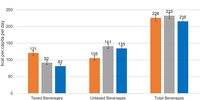
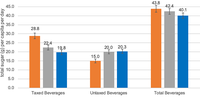
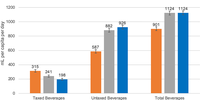
The World Health Organization has also recommended that taxes on sugary drinks be increased to 20%, after research has shown that it could reduce the consumption of sugary drinks by 20%, which would lead to reduced obesity and diabetes rates.
“We all know that diabetes is the leading cause of death in South Africa and non-communicable disease as a whole. So the growing epidemic of diabetes is undeniable, and we need to use all the tools we have in our toolbox to respond,” said Mbalati.
Strengthening the Health Promotion Levy through a sugar tax increase would prevent new cases of non-communicable diseases, he said. From a fiscal perspective, Heala believes the revenue raised from the levy should be earmarked for government efforts to improve nutrition and responses to non-communicable diseases, said Mbalati.
The revenue could be directed to existing interventions such as the National Strategic Plan for the Prevention and Control of NCDs or the National School Nutrition Plan, said Mbalati.

Sugar industry faces pressure
A press statement by the SA Canegrowers’ Association has called on Godongwana to use the mini budget to scrap the Health Promotion Levy.
The association claims the levy has compounded the pressure on canegrowers who have for two years faced challenges from heavily subsidised imports from Brazil, Thailand, India and Eswatini, which have displaced locally produced sugar, as well as this year’s near-collapse of agribusiness sugar company Tongaat Hulett.
The statement referred to the sugar tax as the “job-killing levy”. The association claimed its introduction had caused thousands of job losses. It said research by the Bureau for Food and Agricultural Policy, commissioned by the South African Sugar Association, predicted that if the levy remained in place, sugarcane farming in the country would continue to shrink.
Daily Maverick sent questions to the SA Canegrowers’ Association, but had not received a response by the time of publication.

Other studies have reported that the introduction of the Health Promotion Levy is not associated with job losses.
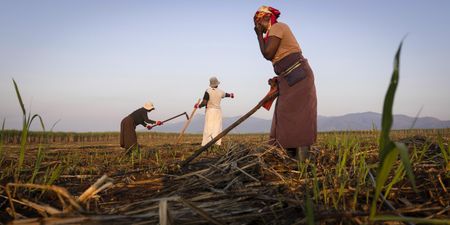
According to Mbalati, the sugar industry should diversify by looking at other sustainable uses of sugar that are not based on its demand in beverages and food, such as biofuel and ethanol innovation.
Mbalati said the sugar industry should reflect on its business model holistically when trying to prevent job losses. He said that even if the levy was scrapped, the industry would still face challenges from factors such as fuel prices.
According to a briefing note on the scheduled mini budget released by the Institute for Economic Justice (IEJ), the country’s heavy reliance on imported fuel from the Gulf region leaves South Africa’s food supply chains (such as the sugar industry) vulnerable.
The ongoing US-Israel war on Iran should serve as an impetus for the reduction of South Africa’s reliance on imported resources, the IEJ said. To protect the country against external disruptions of the supply chain and a cost-of-living crisis, the Strategic Petroleum Stock Policy must be accompanied by the immediate revival of the country’s domestic refining capacity and the phasing out of fossil fuels in favour of renewable energy alternatives, said the IEJ.
Investing in health education
Senior researcher at the Noakes Foundation Karen Heath said the foundation had concerns about the health implications of an increase in the levy.
Although there was evidence that consumption of sugary drinks had decreased after the introduction of the levy, it did not necessarily imply a change in health outcomes, Heath said.
The consumption of sugary drinks was underreported, Heath said. She noted that in the Noakes Foundation’s work with clinics, they often still saw diabetic people waiting in queues with sugary drinks, because this was what was available outside the clinic.
“The reality is that people are still buying these products, and by increasing a levy to 20% it simply means less money for them to be spending on anything else,” she said.
Interventions such as updating South Africa’s dietary guidelines and focusing on educating the public on health should be implemented rather than an increase in the Health Promotion Levy, said Heath.
The levy should remain at its current rate and its revenue should be invested in education programmes, such as informing the public on how to read the labels on the back of products, according to Heath. The public should be able to understand the ingredients listed and how these translated into what was being put into the body, she said.
Scrap or increase?
Daily Maverick spoke to ordinary people on the street about their Health Promotion Levy concerns.
For student Asriel Abrams, an increase in the Health Promotion Levy meant a bigger strain on the budgets of the working class.
He said an increase in sugary drinks prices to promote health had little weight when healthier beverage options were already priced at a premium.
Wendy Marsh said her family often bought sugary drinks, about four two-litre bottles a week. Since the introduction of the levy in 2018, her purchasing habits had not changed, she said, because sugary drinks were often more affordable than healthier options.
Marsh felt the levy should be scrapped altogether. She claimed that an increase wouldn’t prevent people from buying the drinks; rather, they would find places to purchase them at a price lower than at mainstream stores.
She said that a price increase of sugary drinks as a result of the levy would not influence her to buy fewer of these products.
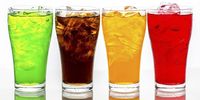
Decades of public health analysis recognises that long-term use of sugary drinks causes overweight and obesity, gangrenous toes, amputated limbs, lost eyesight, dementia, along with heart problems, tooth decay and social stigma. Suppliers have amassed huge wealth from selling the product, but consumers are left to pay for the cost of damaged bodies.
Waghied Hendrick told Daily Maverick that he supported the increase to 20%, as long as it helped improve people’s health. If sugary drinks became more expensive, some people might buy fewer of them and choose water instead. However, Hendricks was concerned that even if the tax increased, the alternative to sugary drinks would be more expensive.
He said a price increase from the levy would not make him purchase fewer sugary drinks, because the market had grown so much over the past decade and competitive pricing had seen people move from bigger brands to local brands at a fraction of the cost. Hendricks’ only motivation for buying fewer sugary drinks would be for health reasons.
“In the bigger scheme of things, for me, the important thing is finding a balance between personal responsibility and also government intervention. We should encourage people to make healthier choices, but we must also ensure that those choices are affordable and accessible to everyone … regulating the industry,” he said. DM
Comments
Scroll down to load comments...