



 Digital gold eliminates the cumbersome logistics and settlement headaches associated with physical gold. (Photo: iStock)
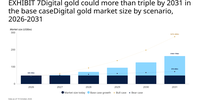
The digital gold market, worth about $50-billion today, is set for liftoff and could tap a swelling vein of demand to reach $700-billion, according to a new report by the World Gold Council (WGC) and Boston Consulting Group.
Digital gold provides exposure to the precious metal through digital platforms, eliminating the cumbersome logistics and settlement headaches associated with physical gold.

“As trading and record-keeping has moved onto electronic systems and markets have become more connected, investors have begun to expect gold to behave like other modern assets,” says the WGC.
Traction is building on this front, bringing one of humanity’s oldest stores of wealth into the digital age.
Token gesture
“Momentum is already building as financial markets undergo a broader digital transformation, bringing tokenised investment products increasingly into the mainstream,” says the WGC.
“Tokenised gold, one segment of the digital gold market alongside vaulted digital gold, has grown fivefold in value since late 2024 to around $6-billion. Cumulative spot trading volumes in tokenised gold exceeded $90-billion in the first quarter of 2026, more than in the whole of 2025.”
This is still small potatoes. The current gold market is worth about $30-trillion at current prices and is focused on jewellery, bars, coins, gold-backed ETFs, OTC5 and central bank reserves. The physical investment gold market is worth about $13-trillion.
The report sees digital gold growing to about $165-billion in the next five years, a figure that could reach $275-billion over the same timeframe if various barriers are removed.
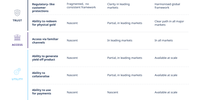
“What holds investors back is not a lack of interest but four key barriers: trust, access, utility and cost. Trust is the swing factor. Investors point to stronger consumer protections, transparent proof of backing, accessible redemption and clearer regulation as the conditions most likely to increase confidence in digital gold,” the WGC says.
Access, meanwhile, is hampered by a lack of platforms outside of big Asian markets.
“Where digital gold is embedded in mainstream channels such as super-apps, payment platforms and banking apps, as seen in India, China and Indonesia, penetration is up to seven times higher than in markets where such distribution does not yet exist.”
The potential for a $700-billion market stems from “latent demand” – a pool of untapped investors who would rather do things in the digital space because this is the 21st century.
“Among today’s digital gold investors, 52% held no gold before their first digital purchase, of which 92% have since bought other forms of gold,” says the report.
Gold has been a red-hot commodity over the past few years and while it is off its historic peaks of almost $5,600 an ounce scaled in January this year, its price remains elevated at more than $4,000 an ounce.
Performance enhancing
A range of factors explain this performance, including geopolitical uncertainty – which enhances the precious metal’s safe-haven status – and central bank purchases, notably in emerging markets as the greenback loses some of its lustre as the world’s reserve currency.
The digital gold market itself is unlikely to move the dial much on this front but is seen as an entry point into the wider bullion market, especially for younger investors who are obviously more wired than their older counterparts.
“Around 65% of latent demand comes from people who have not yet invested in gold. Among those who already hold gold in other forms, more than half would fund a digital gold investment with money not currently allocated to the asset.
“Rather than cannibalising demand for bars, coins or gold-backed ETFs, digital gold is thus likely to attract new investors, and new money,” the report says. DM
Comments
Scroll down to load comments...