


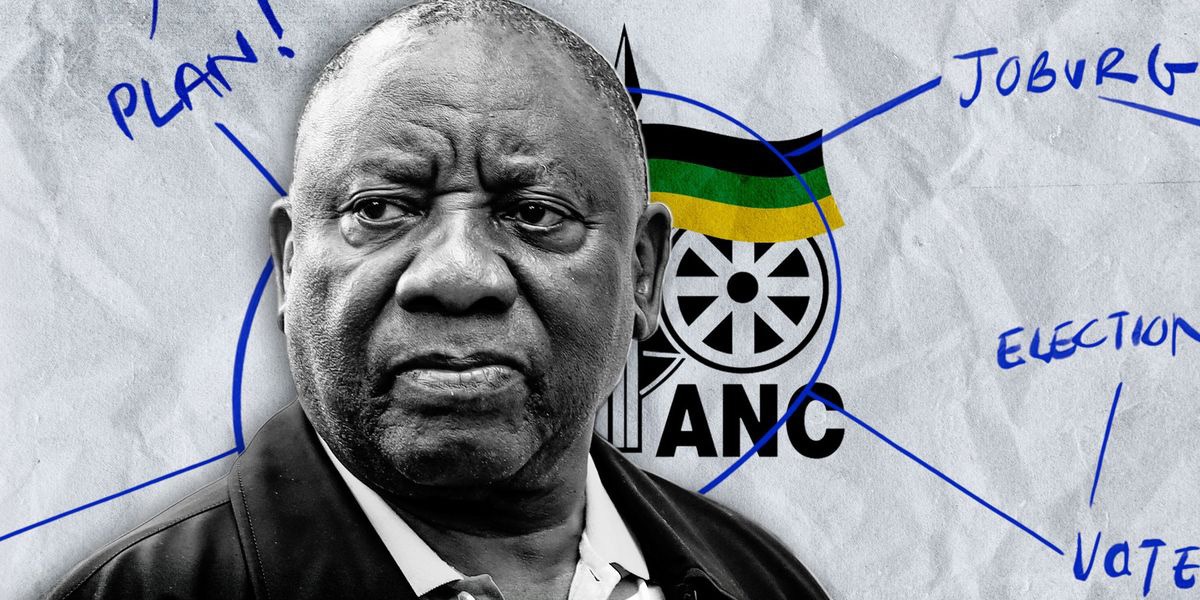
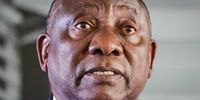
 Cyril Ramaphosa. (Illustrative Image / Cyril Ramaphosa / Gallo Images)
During those hectic days in the winter of 2024, when post-election coalitions were being stitched together at national and provincial levels, South African Communist Party General Secretary Solly Mapaila was running around like a nyaope boy desperate to find a fellow addict to help him out with a fix.
The drug he was seeking was a common, intense hatred of the DA that would prevent the ANC leadership from making a deal with the blue party.
Mapaila was knocking on the door of every influential and semi-influential ANC leader he could find, rallying Cosatu and Sanco comrades to the cause and engaging with potential coalition partners such as the EFF and other parties.
It did not matter that he didn’t have the mandate to negotiate any deal, which was the sole purview of the ANC’s national leadership that had been elected at the national conference in December 2022. He was on public platforms railing against the inevitable.
At the time, the EFF, his preferred main coalition partner, was sensing the ANC’s vulnerability and making impossible demands. With less than 10% of the national vote, the EFF was demanding heavyweight portfolios, including finance.
Jacob Zuma’s party, which some in the ANC were advocating as a partner alongside the EFF, insisted that the ANC drop Cyril Ramaphosa as its presidential candidate.

While Mapaila and others were running around trying to achieve the impossible, ANC Secretary-General Fikile Mbalula’s official team was putting together a more realistic deal with willing partners. It was this putative deal, with the DA as the second-most important player in the 10-party Statement of Intent, that was driving the SACP mad.
It was bad because it was, in the SACP’s view, the construct of “right-wing, DA-led anti-ANC neoliberal forces”. The crux of the panic was that these forces were trying to stymie the aims of the National Democratic Revolution by trying to capture the ANC.
“The core of the DA-led neoliberal forces, highly supported by dominant sections of capital, mainly the white bourgeoisie whose roots can be traced to the era of colonial and apartheid oppression of the black majority, organised itself into the so-called multi-party charter.
“This grouping also received support from Western foundations,” the SACP said, as it went into conspiratorial overdrive.
The Multi-Party Charter had indeed initially been driven by the DA leadership, but had included leaders who were far from being John Steenhuisen’s running dogs.
But where Nats saw “a red under bed”, Mapaila sees a neoliberal conspiracy at every corner. Since he and his cohort failed to scupper the composition of the GNU, Mapaila has not stopped frothing at the mouth about it, which he has called the “highest form of betrayal of our people”, and has continued to mobilise against it within the ANC.
This hook-up was never popular in ANC ranks, so Mapaila had plenty of ears listening to him and applauding his resistance campaign. The deal was deftly and bravely shepherded through by Ramaphosa and Mbalula, who endured much private and public abuse for their efforts.
That the GNU has survived this long is testament to the maturity of leaders of both parties and the reality that both need it badly. There have been several scares, the most notable being the brinkmanship over Finance Minister Enoch Godongwana’s Budget speech in 2025 when it was only read on the third attempt.
Court challenges
Other testing scares have included the DA’s continued court challenges to contested legislation that the ANC cunningly rammed through in its dying days as the parliamentary majority, and were signed by Ramaphosa.
In addition, there are stark differences over foreign policy, which the DA believes should be developed as a GNU product, but which the ANC is hanging on to dearly because it knows that the blue guys (as well as some other more conservative members of the GNU) would want to interfere with some longstanding liberation movement standpoints.
The biggest challenge, however, was getting the GNU through the ANC’s National General Council (NGC) unscathed, the first time it had been formally tabled to the membership.
In the buildup to the December 2025 reflective conference that occurs between conferences, there was a lot of agitation for a revisitation of the GNU arrangement. The top seven leaders and other NEC operators calmed the anger and steered the conversation away from exiting the arrangement.
In its final declaration, the NGC deemed the pact an unavoidable “tactical intervention “that was necessary for national unity and stability, as well as containing the DA within the tent”.
Politicking
That seemed to have temporarily muted the anti-GNU voices until the 2026 election time came around. Elections are about heat. In the heat of the current local government election campaign, the historical antipathy between the two rivals has deepened.
The DA, whose marathon election campaign has run for nearly 18 months, has spared nothing in its portrayal of the ANC’s immense failures at local government level and highlighting its own successes in the municipalities where it is in power.
For its part, the ANC has retreated to its age-old characterisation of the DA as a racist party that cares only about protecting white interests. These are normal barbs that the parties have traded for the longest time, but it would be difficult to persuade a Plutonian arriving on Planet Earth that these were coalition partners.
The thing is, the pressure is again growing within the ANC and its Tripartite Alliance partners to, as the cadres put it, “kick the DA out of the GNU”.
It does not seem to have dawned on many of them that the GNU is not theirs to kick anybody out of. They may belong to the 40% party, but this is an arrangement that was precipitated by the loss of outright power.

At the conclusion of its congress last week, newly elected Cosatu General Secretary Zingiswa Losi read out a resolution that “affirmed …the rejection of a GNU inclusive of right-wing political parties and their neoliberal austerity agenda.”
Sunday World this week reported on a pre-congress document that asserted after the 2024 election “… the leadership of the ANC negotiated behind our backs as Alliance partners, making clandestine deals with the sworn enemy of workers and the poor, the DA. This is the DA that remains an anti-worker, anti-poor, and white supremacist organisation, funded by capital to pursue their interests.”
Then came the bombshell pronouncement from Mbalula himself, after the ANC won the Constitutional Court case against the IEC on the inclusion of candidates for which it had missed the deadline, that the ANC would review the DA’s participation in the GNU because the party had joined the matter as an amicus curiae.
Parliament is big enough to find other partners, Mbalula said, and “there’s nothing that binds us forever with the DA.”
ANC Youth League president Collen Malatji, who tries so hard to be a Julius Malema that he reduces himself to a Disney version of the real thing, also waded in and called for Ramaphosa to immediately fire all DA ministers.
Because of all this noise, there was some flutter about how the arrangement was under threat. The thing, though, is that strong opposition to the GNU within the ANC has never gone away.
Ramaphosa, the GNU’s glue
Ramaphosa has never been anyone you accuse of being infected with the virus of leadership, but in the management of the GNU, this accusation has to stick. He has been excellent at holding things together, even as the DA sometimes behaved petulantly. Many in his party said he had put so much effort into the health of the GNU because it was a project of big capital, of which he is supposedly a loyal servant.
Amid all the flutter, Ramaphosa brushed away Mbalula’s comment by stating firmly that the reasons that got the GNU partners between the same sheets in 2024 still pertain, reminding all that “we are different parties with different policies, different ideologies, different histories…and we are in the main, contestants.”
Brushing away the anti-GNU sentiment might just be the easy part for the president of the ANC. In a few weeks’ time he will have to lead his party through negotiations over the governance of the metros, secondary cities and towns. Many are in precarious states or already in ICU, largely as a result of ANC misgovernance and corruption.
The ANC will be weaker in most of the municipalities where it will be negotiating coalitions, so it will be vulnerable to charlatans and opportunists. Provincial, regional and local leaders will most probably be keen to make deals with the chancers. For the sake of retaining power, the national bosses will probably give these leaders some leeway to make questionable deals.
Johannesburg: The big test
However, the headache will be in the economic epicentres where total collapse cannot be risked. The Great, Big, Beautiful City of Johannesburg will be one of the biggest tests Ramaphosa faces since taking his second oath of office.
The nation’s economic engine has been teetering on the brink of financial and infrastructural collapse for some time, and as the now popular saying goes: If Joburg fails, SA pays. The past eight years of fluid politics at local government have taught us that local ANC networks – political, business and labour – do not like the idea of not being in power. More so in the metros. And more so in Johannesburg.
In 2024, the ANC’s Gauteng leadership defied Luthuli House and rejected a deal with the DA when the latter made demands that Panyaza Lesufi and his lieutenants deemed as untenable as the EFF’s demands at national level.
It was more than that, though. They simply saw working with the DA as a sell-out option. That has not changed. And if anything, attitudes have hardened. Most polls put the DA comfortably ahead of the ANC, while some give the black, green and gold a marginal lead. Whichever way you look at it, if the ANC wants to retain a segment of executive power, it will not be dictating terms.

So, Ramaphosa has a dilemma. If the DA does emerge as the biggest party in the city, will he be able to compel his provincial and regional lords to accept a secondary role in its governance? Pretending to play second fiddle to Al Jama-ah in the past may have worked, but sharing power with an in-charge Helen Zille will be a whole different kettle of fish.
If the ANC narrowly snatches victory, will it be willing to replicate the national picture for the sake of “stability”? And if the provincial and regional lords dig in, is he willing to gamble his last year as ANC president on an unpopular coalition decision?
And, if the ANC chooses another path, which other significant forces can it turn to get over the 50-plus mark? There is ActionSA, the IFP and smaller players, but that will not be enough.
As leaders at the national level have pointed out, the blue pill is one they just might have to swallow, and deal with the consequences later. DM
Comments
Scroll down to load comments...