


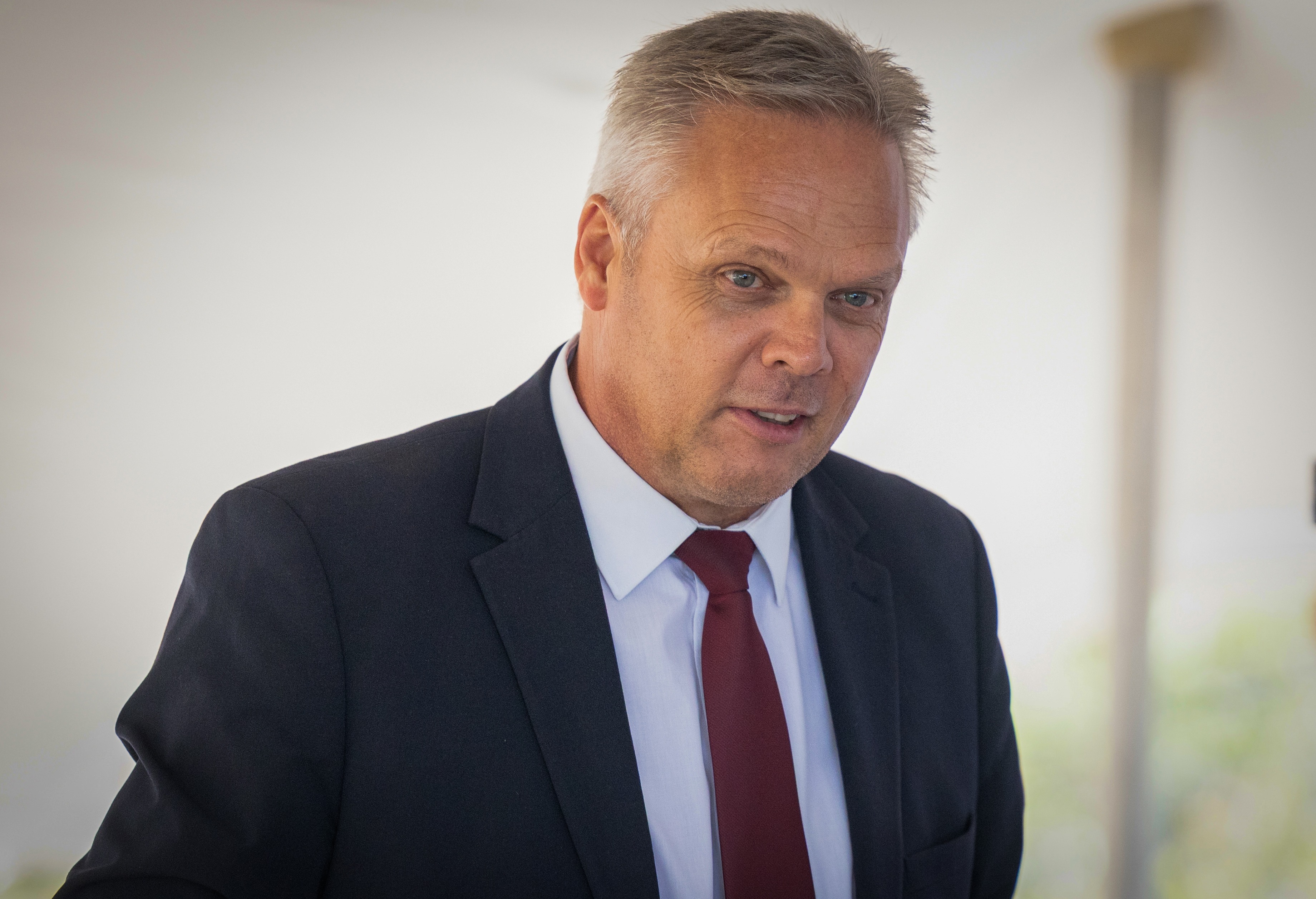
 Agriculture Minister Willie Aucamp has warned of a very hot and dry summer ahead. (Photo: Misha Jordaan / Gallo Images)
As a super El Niño threatens South Africa’s farming sector and the wider economy with drought and potential water shortages, Agriculture Minister Willie Aucamp has warned against complacency.
Much of South Africa’s summer rainfall region got decent rains in September, an additional layer of security to good soil moisture and dam levels. But El Niño only typically gains traction here once summer is fully under way.
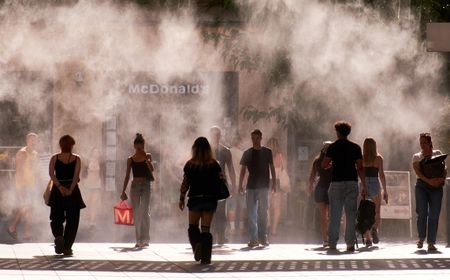
“We are very much concerned. We had a bit of rain now in September, but I tell farmers, ‘Please, do not be deceived that this is not going to happen.’ Some of our farmers are planting now, and I think we are going to have a very hot and dry November, December and January,” Aucamp told Daily Maverick on the sidelines of the AgriSA congress on Wednesday in Irene.
“We’ve got early-warning systems, but this is going to be next level.”
El Niño usually triggers drought in this region, and the latest event is widely regarded as the strongest on record. It is expected to last until at least February.
Aucamp is concerned about the timing of water-use restrictions.
“We should not wait for this to be declared a disaster before municipalities put in water restrictions, and then it spills over and farming communities get less water. I think we need to be proactive in implementing water restrictions from the municipalities’ side,” he said.
“Every municipality will have to decide that on their own, because they know their own resources. But we cannot have a situation where municipalities wait too long to implement what is required, and then water restrictions might have to be implemented on the farming community. We can’t get to a point where they can't irrigate their crops.”
With municipal elections looming, it may be the case that water restrictions before 4 November are not seen as politically wise in some municipalities – but the consequences could be dire. It’s also the case that many South Africans already experience frequent and unintended “water restrictions” because local government failures lead to dry taps.
A game of yields
Aucamp said the department was advising farmers to focus on their most fertile sections of land and not plant in marginal areas.
Most commercial farmers are probably doing so anyway, guided by high-tech and capital-intensive tools such as precision farming, which enables the precise distribution of inputs based on soil quality using GPS. This is a key reason behind the surge in South African crop yields, rain or shine, in recent decades.
The first indication of the amount of land that will be devoted to summer grain crops, including maize, will come on 27 October when the government’s Crop Estimates Committee will provide its first estimate on farmers’ planting intentions.
/file/dailymaverick/wp-content/uploads/2025/06/iStock-1308606393-1.jpg "BM-Ed-HungerHotspots")
Surging fuel and fertiliser prices triggered by the Ukraine and Iran wars will be a constraint. Aucamp said that fertiliser prices had soared by more than 300% since Russia's 2022 invasion of Ukraine.

Turning to livestock, Aucamp said farmers would have to reduce their herd numbers to prevent overgrazing.
A smaller national cattle herd will also reduce the number of vaccines required to contain the foot-and-mouth disease (FMD) outbreak. On that front, Aucamp said that 70% of the national herd of more than 13 million animals has been vaccinated to date and that the goal of 80% by the end of this year was in reach.
“If you’ve got a cow that’s not giving you a calf any more, or a cow that’s not giving the proper amount of milk any more, get rid of that animal. Rather have less stock but stock of good quality. We can always build up that stock again.”
Amid all the focus on El Niño and FMD, other agriculture issues such as the politically thorny one of land reform have faded on the public’s radar screen. But Aucamp, who assumed the agriculture portfolio 3½ months ago, said it was a priority of his.
“We are busy with a project where we are identifying 100 farms per province, black farmers who are currently renting their farms from government, to transfer the land into their names, and this is just the start,” he said.
“They must have title deeds. We must see that land gets out of the hands of the government. You’re not going to invest in a farm if it’s not yours. You can use it as collateral to obtain finance,” he said. DM
Comments
Scroll down to load comments...