



 On Wednesday, 14 October 2026, Police Portfolio Committee Chairperson Ian Cameron said full budget spending meant little while investigations remained overloaded, DNA evidence was delayed and violent crime continued to plague communities. (Photo: Gallo Images / Misha Jordaan)
South Africa’s forensic DNA analysis system is floundering under a backlog of nearly a quarter of a million exhibits that have not been processed within the set statutory deadline.
Only 1.5% of DNA profiles generated during the 2025/26 financial year were finalised within the prescribed 30 days, while hundreds of thousands of exhibits exceeded their turnaround times.
These figures were presented to Parliament last week by Akhona Ndlela of the National Forensic Oversight and Ethics Board (DNA Board).
SA Police Service (SAPS) data, however, paints a more positive picture as it uses a different target from the regulatory framework.
Responding to the presentation, on Wednesday 14 October, committee chairperson Ian Cameron challenged the SAPS’ use of a 90-day processing target for DNA profiles, arguing that it conflicted with the statutory 30-day framework and distorted the scale of the backlog.
The police committee demanded clearer figures, explanations for unregistered work and samples in storage, and a concrete turnaround strategy.
“This is very important. It seems there was an arbitrary decision by SAPS to suddenly choose to have a 90-day period for processing, which is contrary to legislation indicating 30 days is the period we use to measure whether we have met the necessary deadlines,” Cameron said.
He said the DNA Board had agreed that the 90 days should not be used because it skewed the figures relied on for oversight. Committee members also questioned discrepancies in the reported overdue totals and asked why almost 166,000 reference DNA samples remained in safe storage.
Investigations derailed
Cameron warned that delays in processing crime-scene samples could jeopardise investigations and prosecutions.
“These are samples that come from the actual crime scene, and it is critical for those samples to be processed. It essentially means a case can be struck off the roll, and a detective can lose all the work they have done if that part of the process is not completed properly,” he said.
The committee also raised concerns about delays in cases involving women and children, including prioritised gender-based violence and femicide (GBVF) matters.
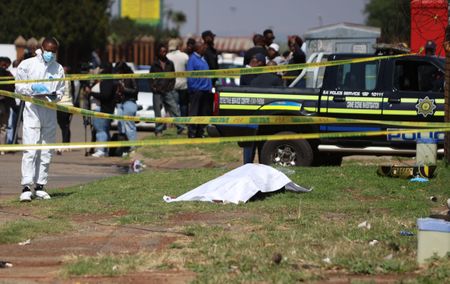
Cameron underlined that timely forensic processing could make the difference between an imminent arrest or successful prosecution and further delays. He highlighted the recurring problem of cases being postponed or withdrawn because forensic reports were unavailable.
“It is frustrating to see there are arbitrary decisions made that influence oversight directly and skew the accuracy of the numbers we rely on for proper oversight,” Cameron said.
The DNA Board also provided an update on its efforts to prioritise GBVF cases for court enrolment. In the last year, it prioritised 7,182 GBVF cases, down from a high of 20,492 in 2022/23.
“While this represents a significant reduction from previous years, the National Prosecuting Authority (NPA) has assured the board that the decline has not adversely affected the timely enrolment and progression of GBVF matters through the criminal justice system, as the number of matters prioritised continues to exceed the number requested by the NPA,” its presentation said.
/file/attachments/orphans/oped-Taylor-firearms2_499145.jpg "Police investigate the crime scene where the body of the ninth woman was found in Villa Liza, Ekurhuleni, on 17 September 2026. (Photo: Felix Dlangamandla)")
Budget reviews
The police committee was meeting on Wednesday to consider its Budgetary Review and Recommendation Report (BRRR) on the SAPS, the DNA Board and five other institutions responsible for policing, civilian oversight and forensic accountability.
The other institutions are the Civilian Secretariat for Police Service (CSPS), the Independent Police Investigative Directorate (Ipid), Psira (the Private Security Industry Regulatory Authority), and the Office of the DPCI Judge (also known as the Hawks Ombud).
A BRRR is a report produced by a parliamentary portfolio committee after reviewing a government department’s performance and spending during the previous financial year.
The meeting came against a backdrop of deadly violence. Cameron acknowledged the recent deaths of four people after a gunman opened fire at an ANC Youth League memorial gathering in Katlehong, Ekurhuleni, and the fatal stabbing of a police officer in Duncan Village, Buffalo City.
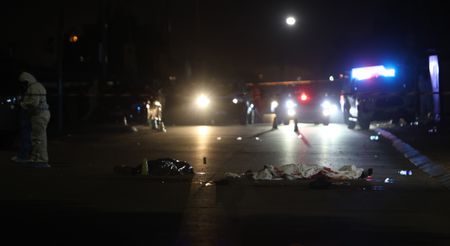
Cameron extended condolences to the victims’ families and paid tribute to the slain officer, saying the violence underscored the urgency of the committee’s work.
“These things all give urgency to why Wednesday’s work is so important,” he said.
Budgets spent, targets missed
The SAPS spent 100% of its budget but achieved barely half its performance targets, raising questions about whether public money is delivering effective policing.
The Auditor-General warned Parliament on 2 October that detective capacity was under pressure. Of 3,294 detectives, 1,227 had five years or less of service, while some handled between 600 and 800 dockets each.

Cameron also challenged how murder-conviction rates were presented, warning that figures based only on cases reaching court could paint a misleading picture of police performance.
“If we just ask for the conviction rate, we get figures anywhere from 80%, 85%, even 90% and above. But we need to measure that against murders actually reported. It can’t be that we only measure it according to cases that actually reached court,” he said.
Illegal firearms, extortion and gang violence remained major concerns. Cameron questioned whether police activity was translating into safer communities.
“We see a lot of input, but the output doesn’t always feel as though we are really turning the tide,” he said.
Measurable improvements
Cameron made clear that the committee’s role went beyond scrutinising reports and recording institutional shortcomings. Its recommendations, he said, must identify what needed to change, who was responsible and when officials must provide evidence of progress.
Cameron stressed that oversight must deliver measurable improvements, not merely record institutional failures.
He stated that for the SAPS and the DNA Board, this meant confronting backlogs, accelerating forensic processing and properly supporting detective services and the Family Violence, Child Protection and Sexual Offences (FCS) units.
The Civilian Secretariat for Police Service, meanwhile, must demonstrate whether its oversight recommendations on domestic violence monitoring were producing tangible improvements at police stations.
On the Independent Police Investigative Directorate, Cameron acknowledged 84 reported criminal convictions and increased output in older cases, while stressing the need to scrutinise outstanding cases, institutional capacity and financial controls.
“Supporting independent police oversight is critical for the committee, particularly if we want to strengthen public confidence in these institutions,” Cameron said.
Regarding the Private Security Industry Regulatory Authority, Cameron said recovery efforts must translate into money actually recovered and credible consequence management. The Office of the DPCI Judge, meanwhile, must maintain reliable records and ensure complaints were resolved timeously.
Ultimately, Cameron said: “Adopting these reports must commit us to follow-through. The real test is whether victims’ concerns are addressed, public money is translated into effective policing, and our communities become safer.” DM
Comments
Scroll down to load comments...