



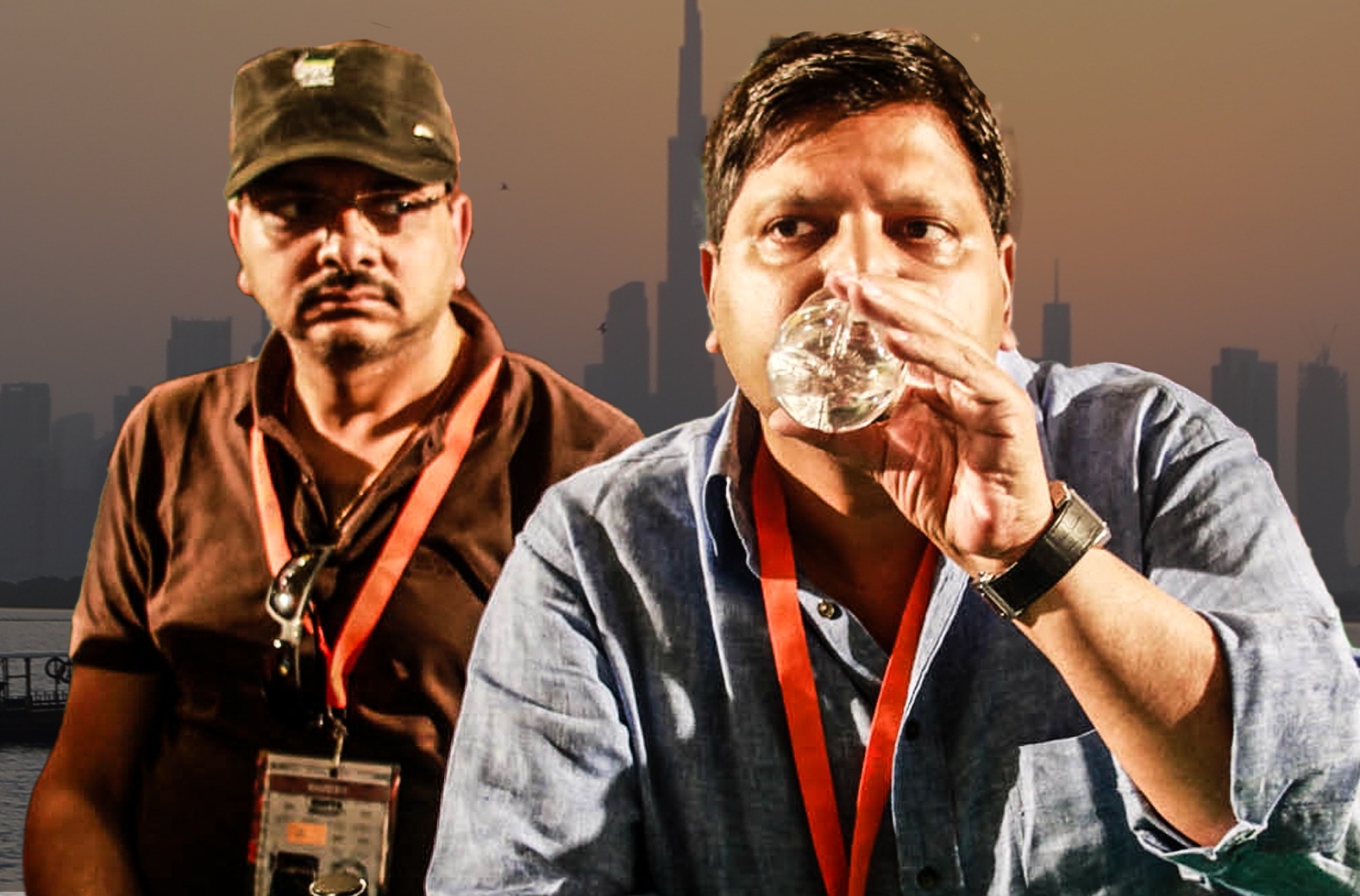
 Illustrative image | Burj Khalifa and the Emirates Towers visible in the background in Dubai. (Photo: Fadel Dawod/Getty Images) | Atul Gupta and Rajesh Gupta at the ANC’s elective conference on 17 December 2012 in Mangaung. (Photo: Gallo Images / Sunday Times / Simphiwe Nkwali)
Various extraditions have been carried out from the United Arab Emirates (UAE) this year.
Take the high-profile case of alleged Kinahan cartel boss Daniel Kinahan, accused of crimes ranging from drug trafficking to murder – he was sent packing back to Ireland in August 2026.
His dad Christopher’s UAE visa was reportedly also cancelled, meaning that after years in Dubai, Christopher has until the end of September – this week – to leave if he has not already done so.
(Daily Maverick previously reported that evidence suggests the Irish-origin Kinahan cartel has ties to South Africa.)

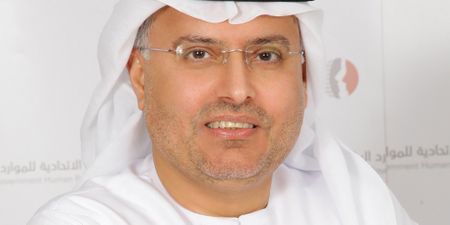
At the time of Daniel Kinahan’s enforced return to Ireland, the UAE’s justice minister, Abdullah bin Sultan bin Awad Al Nuaimi, had strong words about the development.
He noted that the extradition underscored his “nation’s steadfast approach in supporting global efforts to combat transnational organised crime, pursue perpetrators of serious offences and prevent their escape from justice”.
‘International cooperation built on trust’
The 15th United Nations (UN) Congress on Crime Prevention and Criminal Justice is now being held in the UAE.
Billed as the “world’s largest and most diverse gathering” of crime prevention and criminal justice figures, it started a few days ago on Sunday, 26 September 2026, and is set to wrap up on Thursday, 1 October.
Al Nuaimi is the congress’s president.
/file/attachments/orphans/uae-extradition-caryn3_945615.jpg "UAE’s Justice Minister Abdullah bin Sultan bin Awad Al Nuaimi. (Photo: https://www.moj.gov.ae/)")
South Africa had a delegation there, including police officers and a minister.
The issue of extraditions cropped up at the convening.
UAE publication Gulf Today reported that in an address, Al Nuaimi said borders should not be viewed as shields for criminals and their assets.
“We see international judicial cooperation as a partnership between countries, built on trust, direct communication, swift action and practical solutions,” he was quoted as saying.
The report also said Al Nuaimi would expand the UAE’s treaty network and deepen judicial partnerships.
“These efforts reinforce the UAE’s position as a trusted global partner in combating organised and transnational crime and advancing justice and the rule of law,” it said.
Fugitive Gupta brothers
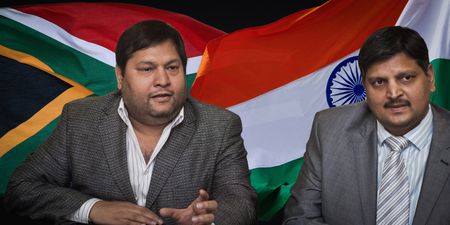
This brings us to the Guptas, Atul and Rajesh, the brothers the South African government has deemed “fugitives”.
They are originally from India and wanted in South Africa in connection with State Capture crimes, which they have denied being complicit in, and which happened when Jacob Zuma was president between 2009 and 2018.
Since then, another iteration of capture has become apparent in South Africa, meaning related news tends to supersede matters around the Guptas.
US action against the Guptas
In 2019, the US Treasury Department’s Office of Foreign Assets Control sanctioned Ajay, Atul and Rajesh Gupta, along with their associate Salim Essa. The Treasury’s under secretary for terrorism and financial intelligence, Sigal Mandelker, had said: “The Gupta family leveraged its political connections to engage in widespread corruption and bribery, capture government contracts, and misappropriate state assets. Treasury’s designation targets the Guptas’ pay-to-play political patronage, which was orchestrated at the expense of the South African people.”
This also emphasises how older State Capture, the foundation beneath what is now transpiring, has not been properly dealt with.
Aspects remain unresolved.
Atul and Rajesh Gupta, their denials aside, epitomise this.
In early 2022, the international police organisation Interpol confirmed that red notices had been issued for the brothers.
A red notice is a worldwide request for law enforcement to locate and provisionally arrest those flagged pending their extradition.
‘Shock and dismay’
According to South Africa’s government, a few months later, in June 2022, the UAE told it that the Guptas had been arrested in Dubai.
The following month South Africa delivered a formal extradition request to the UAE.
It followed up in September 2022, writing to Al Nuaimi – the very UAE minister now speaking positively about extradition plans and actions.
In October 2022, South African officials travelled to the UAE and asked to be kept up to date on the Gupta extradition case.
Fast-forward to February 2023, the South African officials sent Al Nuaimi a letter “requesting a written update on the extradition proceedings”.
That apparently did not happen.
/file/attachments/orphans/Peter-USsanctions3_477127.jpg "Minister Ronald Lamola. (Photo: Gallo Images/Luba Lesolle)")
Instead, South Africa’s Justice and Correctional Services Minister at the time, Ronald Lamola, said that in April 2023 “we learnt with shock and dismay that the extradition hearing had been concluded in the Dubai Court on 13 February 2023 and our extradition request was unsuccessful”.
The reasoning was that the court found that the UAE had jurisdiction to prosecute a money laundering charge, while an arrest warrant relating to fraud had been cancelled.
Meanwhile, the Gupta brothers left the UAE.
Resurfacing in India
In 2025, Daily Maverick reported that they had probably been in India for several months.
That year, Investigating Directorate Against Corruption head Andrea Johnson referred to previous attempts to get the UAE to extradite the Guptas, or explain why it chose not to.
“Twelve note[s] verbales later, we still do not have any response from the UAE about why the extradition failed. Safe to say that they have asked us to resubmit,” she had told Parliament.
Johnson’s words implied that South Africa was struggling with the UAE to get clarity on what really happened with the failed Gupta extradition and related processes.
South Africa’s unprecedented law enforcement implosion
In July 2025, the KwaZulu-Natal police commissioner, Nhlanhla Mkhwanazi, held a press conference during which he alleged a cartel, later identified as the Big Five, had infiltrated South Africa’s criminal justice system, politics and private security. His accusations sparked unprecedented volatility in law enforcement structures – several senior officers have since been arrested, while others, including National Police Commissioner Fannie Masemola, have been criminally charged and cleared.
The police minister at the time of the allegations, Senzo Mchunu, was sidelined because some were related to him. The fallout extended to the country’s controversial Crime Intelligence unit and the Investigating Directorate Against Corruption because Mkhwanazi alleged that a rogue element was running through these. The directorate’s boss at the time, Andrea Johnson, denied it but has since acknowledged there were problems in the unit. Johnson’s proximity to senior Crime Intelligence officer Feroz Khan was questioned. She has since resigned. He has been fired. Both face several serious accusations.
She resigned from her position earlier this year while facing mounting accusations in South Africa’s law enforcement scandal, which hinged on accusations that a cartel has infiltrated the country’s criminal justice system.
This is the State Capture scandal that has exploded since the Gupta-centred one from the Zuma years.
Ongoing processes and active red notices
It seems that the Gupta brothers have remained in India.
National Prosecuting Authority boss Andy Mothibi recently said it was working with authorities in the UAE and India through mutual legal assistance processes.
This suggests that even if the brothers are in India, the UAE may still hold some influence in the extradition saga.
/file/attachments/orphans/Gathering-CarynCrime5_946435.jpg "Andy Mothibi, National Director of Public Prosecutions, NPA, The Gathering at the CTICC, Cape Town, 11 September 2026. (Photo: David Harrison)")
In a response to parliamentary questions, dated last week, Acting Police Minister Firoz Cachalia said the brothers remained the subject of Interpol red notices.
His reply also said they were believed to be in India.
Back to the UAE.
Actions vs words
Speaking there at the 15th UN crime prevention congress a few days ago, Justice and Constitutional Development Minister Mmamoloko Kubayi said South Africa recognised that “in an era of rapid technology advances, criminal networks adapt […] and exploit vulnerabilities across borders”.
She also said strengthening international cooperation to disrupt criminal networks was imperative, as was information sharing plus mutual legal assistance.
This is along the same lines as Al Nuaimi’s words about seeing “international judicial cooperation as a partnership between countries, built on trust”.
India was also represented at the UAE convening.
Arjun Ram Meghwal, its minister of law and justice, was there and reportedly referenced the importance of international cooperation.
Collectively, this sounds necessary and commendable, but questions remain when applying those words to what has so far happened with Atul and Rajesh Gupta, especially in terms of the UAE.
In a video message to the UN’s crime prevention congress, UN deputy secretary-general Amina Mohammed described the convening as “an opportunity to renew our shared commitment to justice and the rule of law, and to translate that commitment into action”.
Indeed, actions speak much louder than words. DM
Comments
Scroll down to load comments...