



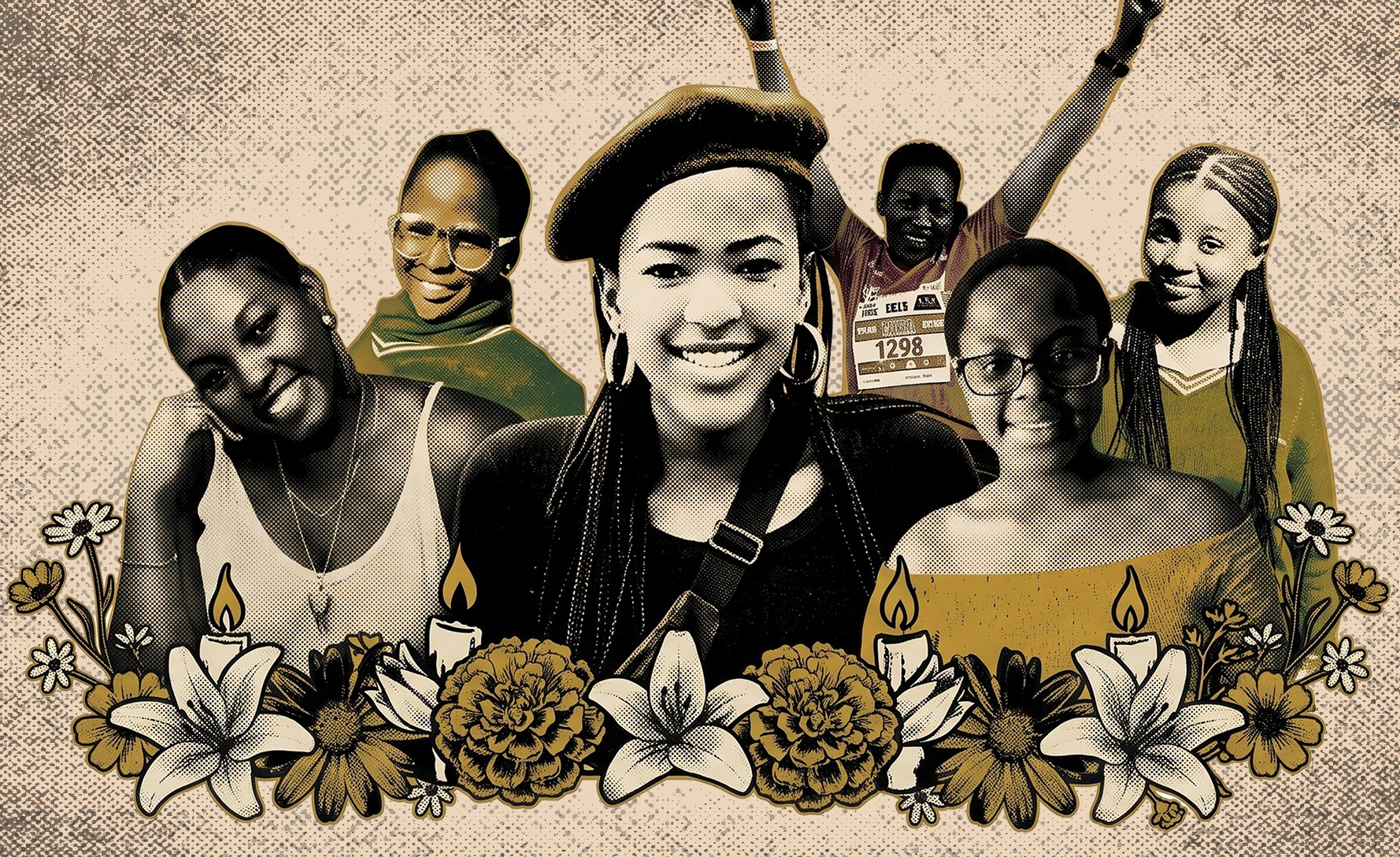
 Gender-based violence has been declared a disaster in South Africa, but the killings continue. Some of the many victims include, from left: Olorato Mongale. (Mpiloh Zuma / Facebook) | Sinothando Malinga. (Supplied) | Uyinene Mrwetyana. (Facebook / Zuki Lamani) | Elizabeth Moselakgomo. (Supplied / Family) | Lithaliyanda Ntoni (Supplied) | Ibanathi Peter (Supplied). ( Illustration: Kevin Momberg)
While the investigation into the murders of at least nine women in Ekurhuleni in recent months continues, the killings have highlighted the ever-present fear women in South Africa live with, the shortfalls in society and government’s response to gender-based violence and femicide.
Women readers told us how safety concerns affect their everyday lives. Read their responses below. Some readers consented to their names being published while some chose to remain anonymous.
‘I play scenarios in my mind’
I work four minutes, walking distance, from my workplace. It is in a suburb and there is a pavement, no open fields, etc, and I walk in broad daylight. Every single moment I am on that four-minute walk, I have my eyes and ears open and I play scenarios in my mind because to be prepared might save my life. – DM reader
‘It feels soulless. But that’s still better than lifeless’
I used to drive into Khayelitsha to visit my foster daughter’s family. I used to drive into Langa to go to church. I used to drive into Nyanga to deliver food and clothing to children’s homes. I can’t do that any more. Not even social workers can do home visits in Khayelitsha any more.
How does that protect children like mine? I used to help people who came to my gate. I used to help people begging at traffic lights. I used to stop to help if I saw someone who looked in difficulty on the side of the road. I can’t do that any more. I lock my car doors and keep the windows up.
I saw a shopkeeper kick a homeless man a few nights ago. I didn’t stop to help. It’s still troubling me. My whole life, I’ve been a helper. Now, staying alive to be a mother to my children means I am not able to be that helper any more. It feels soulless. But that’s still better than lifeless. – DM reader
I go out as little as possible, preferably only to places where people I know will also be. Avoid stores as far as possible. When I can’t avoid new places, I make sure everyone I know knows where I will be going and for how long. – DM reader
‘A gamble with my life’
I live in fear these days. It’s hard to go about day-to-day duties because of the worry that I am under the eyes of a potential killer. Something as easy as going to work sounds like a gamble with my life. – DM reader
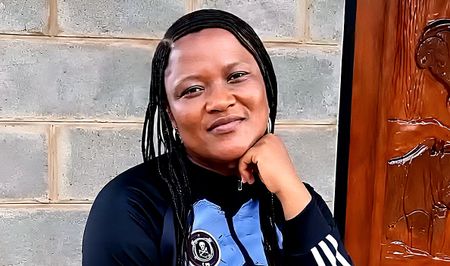
‘It’s not all men, but it is always a man.’
I used to only run in groups or in areas considered safe. I would take off my jewellery, lock my phone in the car, and carry my keys with the sharp ends pointing out between my knuckles. I never wore headphones so I could always hear someone approaching. And this was normal for me as a woman running in Cape Town.
I live in the UK now, and let me say the problem exists here too. Maybe not as prevalent in South Africa, but I still take off my jewellery and run where other people can see me. I still avoid dodgy areas and if I’m really honest, I notice where the men are. Because what Cassandra [Gudlhuza] says is 100% right: it’s not all men, but it is always a man.
We need more men to stand up for us, call out their friends for antisocial behaviour like catcalling and staring. We need men to report when they see behaviours like this. Be an ally and an advocate for us, helping to make our voices louder and louder. – Claire Shortt
My husband will cycle to work to avoid traffic, but I do not feel safe enough to cycle anywhere alone, so I’m always having to drive everywhere. – DM reader
‘I can’t afford to help any of them’
I see men hitchhiking along the road and I would like to pick them up, and 99% of them are decent men who would never hurt me, but because of that 1% who would hurt me, I can’t afford to help any of them, and that makes me terribly sad. – Inge Papp
‘I don’t go out at night’
I don’t go out at night, because of the lack of lighting and road safety. Alcohol is also one of the drivers of violence against women, so I avoid events where drinking is the point.
My Strava app is set to heavy privacy modes, with most of my data hidden from the public, in case of stalkers. I have a kubotan (a pocket stick) on my keys to do extra damage. However, as I teach in my dojo – be alert, not afraid. I refuse to stop going for runs or living my life. I just take the necessary precautions, which sucks, but life must go on. – Zoë Jagger-Hinis
I am always alert but am now more alert to my surroundings. I refuse to live scared in my own country and am ready to attack if anyone dares to threaten me. I do not carry arms or sprays. – DM reader
‘We are hypervigilant’
As women, we are constantly more vigilant. We are six times more aware of our surroundings than the average man. We are hypervigilant in everyday situations. Something as simple as a man standing too close to you in the queue at the grocery store sets off anxiety responses most men are oblivious to. – DM reader
‘My safety influences every decision’
It makes me so angry to have to limit my movements, but my safety influences every decision in my day, from what I wear to where I go. What’s worse is that if something happens, people will find a reason to say it was my fault.
I understand that psychologically they want to reassure themselves that it wouldn’t happen to them (they reassure themselves that they would have done something differently). But the truth is that no matter what we do as women, we are not safe.
Women are murdered in their own homes. They are murdered going to the post office. If I want to exercise, I take my huge dog with me – but a friend of mine had her two dogs with her when she was attacked in broad daylight. It is so unfair, and telling us to try harder not to be murdered is truly not getting to the root of the problem.
‘I deeply resent that I can’t run in my own streets in the dark’
I live in Harfield Village, Cape Town. It’s a pretty affluent suburb. I run and try to walk instead of drive as much as possible (grocery shopping, local appointments, etc). I deeply resent that I can’t run in my own streets in the dark, and when I’m walking alone I need to remove obvious jewellery before I go, and remember to monitor vehicles and walkers around me, check behind me, etc.
I mean I COULD go out in the dark alone and bejewelled, but it wouldn’t be clever. No man should actively make himself a target either, but just being female doubles (triples? more?) the risk. – Nicola Allen
Everything – where to walk, when to walk. – Virginia Crawford
‘All the government offers us are condescending survival tips’
Safety concerns are nothing new to us – femicide and GBV have cast a shadow over our lives long before these recent killings. So many of us already live by strict unwritten rules: never going out after 6pm unless it’s a special occasion surrounded by family and trusted friends, or only dating within mutual social circles because the risk of meeting a stranger and simply never coming home is far too real.
It breaks my heart that our minds aren’t free to focus on our careers or our children’s futures; instead, our biggest daily worry is just making it back home alive. It’s infuriating to watch official resources mobilised overnight to protect undocumented immigrants, while our cases sit cold and police patrols to safeguard women are nowhere to be found.
And all the government offers us are condescending survival tips: “jog in groups, travel in groups, don’t date, don’t take an Uber alone.” Even twins split up eventually – how on earth are we expected to build a life when we are constantly told to shrink it just to stay alive? – Mantoa Chokoe
I’m scared to go anywhere new alone. I share my location with my brother 24/7. I avoid going out in the evenings. I get nervous if someone is walking behind me and keeping pace. – DM reader
‘Precautions have become almost automatic’
Safety concerns affect many of the everyday choices I make as a woman. I feel safer when I’m accompanied by someone, especially a man. When I go to a public bathroom, I always make sure I go with someone, and I don’t walk alone in secluded places.
I’m constantly on high alert, paying attention to my surroundings and to what feels safe and what feels off. I stay off my phone when I’m walking outside so that I can remain aware of what’s happening around me, and I try to look as fierce and confident as I can.
Even in ordinary situations, I’m often thinking about where I am, who is around me and whether I feel comfortable. These precautions have become almost automatic, but it can be tiring to always have that level of awareness. – DM reader
‘We need more patrollers’
As a hiker and avid flora lover, also having been mugged above Rhodes Memorial in Cape Town, it is tragic that I need to fear for my life and for my possessions being stolen when I try to be fit and follow a passion. The municipalities, provinces and SAPS should have far more patrollers on the streets.
At my home, I contribute to an improvement district which spends hundreds of thousands on patrollers. The state should be paying for more patrollers everywhere; visible policing would reduce crime markedly and increase employment. Rather than spending over R1m to get our sports minister to watch a World Cup for a month when our national team were knocked out so early! – Debbie Wall-Smith. DM
Comments
Scroll down to load comments...