


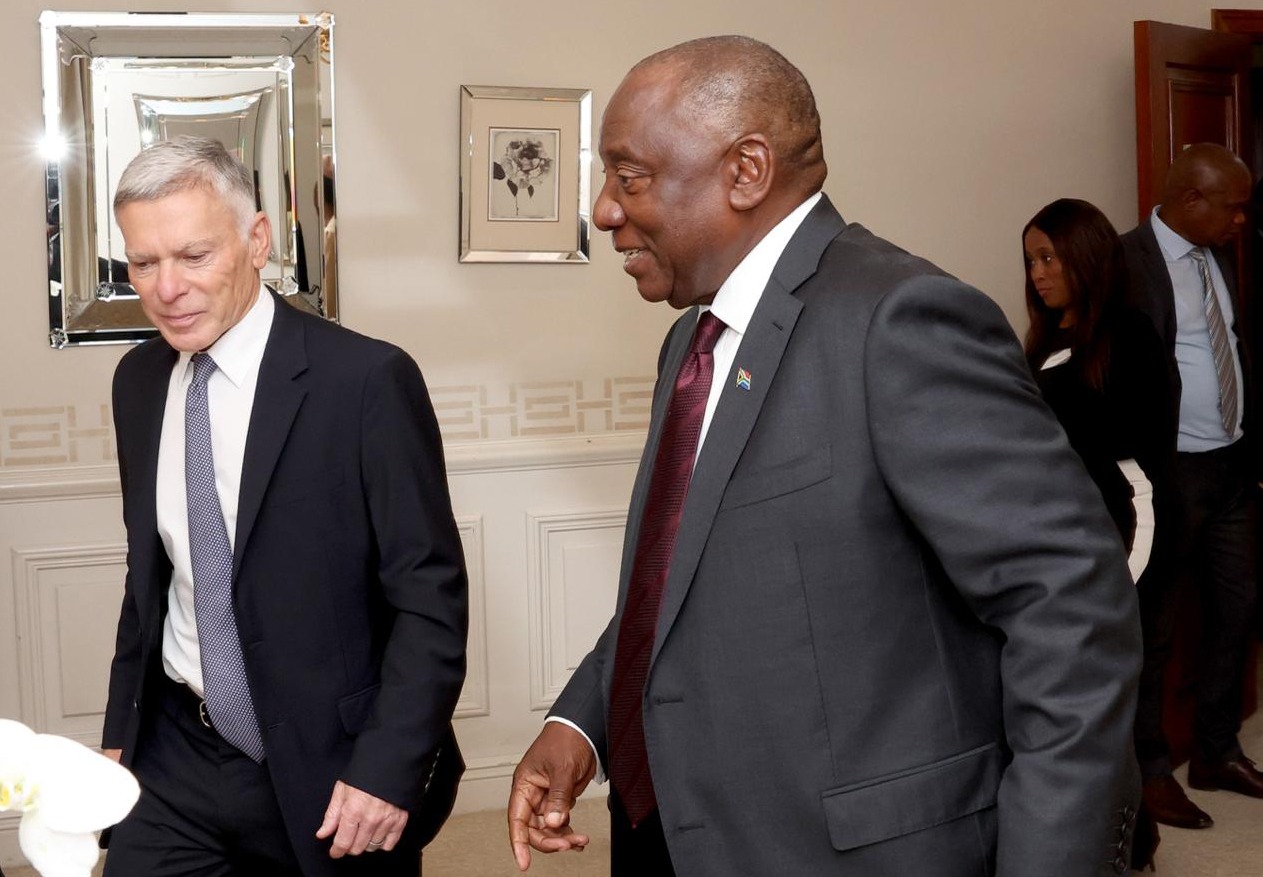
 President Cyril Ramaphosa with Discovery CEO Adrian Gore at the launch of Phase 3 of the Government/Business Partnership, held at Summer Place in Johannesburg on 20 August 2026. (Photo: Kopano Tlape / GCIS)
President Cyril Ramaphosa launched the third phase of the “Government-Business Partnership”, a collaboration aimed at fixing the many ills that plague the economy, with the unchanged and elusive aim of economic growth of more than 3% supported by targets for Eskom’s restructuring, private investment in Eskom and the rollout of the long-awaited mining cadastre by March 2027.
“Our immediate objective is to lift economic growth above 3%. But growth of 3% cannot be the summit of our ambition,” Ramaphosa said in his prepared remarks.
/file/attachments/orphans/WhatsAppImage2026-08-20at150806_579306.jpeg "Martin Kingston, DG inn the presidency Phindile Baleni and finance minister Enoch Godongwana during the launch of Phase 3 of the Government Business Partnership held at Summer Place in Johannesburg on 20 August 2026. (Photo: Kopano Tlape/GCIS)")
When Phase 2 was launched in October 2024, the target was growth of more than 3% by the end of 2025, and that was not nearly reached. Growth last year was 1.1%, and the economy may well be contracting.
But some achievements have been made. Many of the Phase 3 goals certainly look obtainable – not least because they have been announced before, but have been delayed.
To counter organised crime and corruption, South Africa managed under Phase 2 to get its FATF grey listing removed. But municipal dysfunction, the riveting testimonies before the Madlanga Commission, and the brazen attempt to bribe Daily Maverick’s Pieter-Louis Myburgh make clear that corruption remains rampant.
Phase 3 aims for 7 “high impact” prosecutions by Q1 2027 “backed by private sector legal, forensic and analytic capacity” – an initiative that Daily Maverick first reported on three years ago that now seems to be bearing fruit.

Regarding state-run logistics group Transnet, which has been on the rebound under group chief executive Michelle Phillips, Phase 3 aims to have six private train operating companies on the lines in 2027.
The momentum to reform Eskom will be maintained, with the South African Wholesale Electricity Market set to be launched by early 2027 – delayed from an initial target of April 2026 – which will replace the historic monopoly and its single buyer model with one based on transparent, competitive pricing.
An additional 550km of transmission line is scheduled to be built by March 2027.
On the mining front, Phase 3 says the cadastre system will be rolled out, also by March 2027. This was announced in June by the Department of Mineral and Petroleum Resources — the latest in a long list of promised dates – but it is now embedded in an initiative that has Ramaphosa’s weight behind it, upping the political pressure on the department to finally deliver.
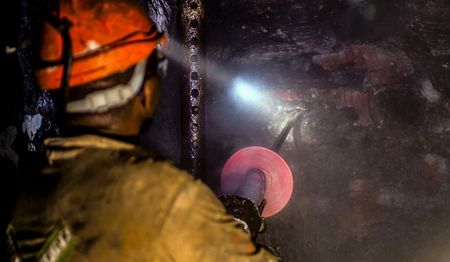
A functional mining cadastre displays the state of play of mining rights in a country and its geology, and enables companies to seamlessly apply for such rights transparently. The lack of one is seen as a key deterrent to investment in South Africa’s mining sector, notably for exploration.
Mining, along with tourism, agriculture and agro-processing, were additions to the partnership for Phase 3.
“These sectors have been selected because they have significant potential to attract investment, earn foreign revenue, strengthen localisation and create employment at scale,” Ramaphosa said.
It is easy to dismiss such launches as a lot of hot air, and the big aim from previous such events – an economic growth rate of over 3% – remains woefully short of that target.
But it’s also the case that real reforms are happening – South Africa’s credit ratings upgrades are testimony to that – and collaboration rather than conflict is needed between government and business on these fronts to get the economy rolling again. DM
Comments
Scroll down to load comments...