



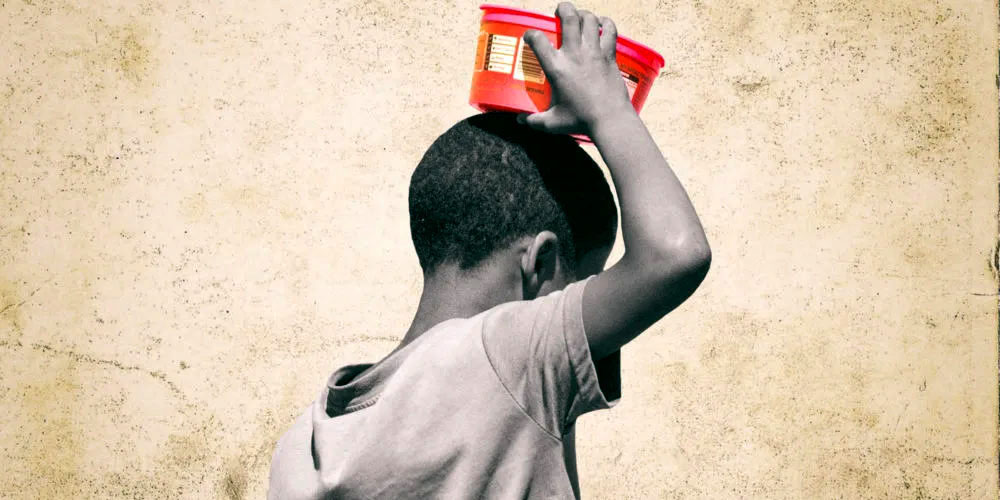
 Stunting affects the development of more than a quarter of South African children under five. (Photo: Gallo Images / Brenton Geach)
Obesity and overweight rates in young children have almost doubled since 2016 in South Africa.
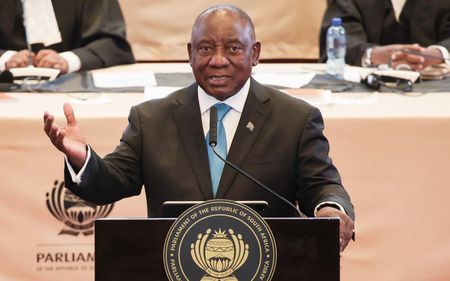
In his State of the Nation Address this year, president Cyril Ramaphosa vowed to eradicate child stunting by 2030 when he said “This year, we will embark on a mission to end child stunting by 2030 and tackle malnutrition among young children, in line with the National Strategy to Accelerate Action for Children.”
The Children’s Institute, a child-centred research unit at the University of Cape Town is calling for more urgent action, stressing that nearly one in four young children are overweight or obese with rates increasing from 13% to 22.3% from 2016 to 2023
At the same time, more than one in four young children are stunted, and stunting rates have remained “stubbornly high” for decades, Children’s Institute’s communications and education specialist Lori Lake told Daily Maverick.
While child stunting restricts a child’s growth and their brain development, both stunting and obesity and overweight increase the risk of developing non-communicable diseases, such as diabetes and hypertension, later in life.
Stunting, and obesity and overweight, are not mutually exclusive problems, according to Lake, overweight and stunting can occur in the same household or in the same individual, and children who are stunted in their early years, are at greater risk of becoming overweight and obese later in life.
Lake argued that SA must take action in ways that address both issues.
“It is... vital to ensure that we adopt double-duty actions that address both the longstanding burden of stunting and the rapid rise in overweight and obesity,” she said.
/file/dailymaverick/wp-content/uploads/2022/01/MC-Food-Part2_1.jpg "The government doesn’t really understand the true cost to the country of obesity, and of obesity- and overweight-related conditions, says Wits University’s Professor Karen Hofman. (Photo: intergrisok.com / Wikipedia)")
Sketching the big picture
The Children’s Institute made a submission to the South African Human Rights Commission’s inquiry into SA’s food systems in February 2026. The submission was intended to “sketch the big picture” of child malnutrition in SA, and illustrate how this double burden of malnutrition will require intervention across a range of sectors and government departments, said Lake.
Major drivers of child malnutrition are poverty, food insecurity and unemployment. Statistics SA records that in the last quarter of 2025 the unemployment rate was at 31.4%, and has risen to 32.7% in the first quarter of 2026.
/file/attachments/2995/Labour-market-rates-by-age-group-final-1536x1049_976411.jpg)
According to FoodForward SA and the Southern Africa Labour and Development Research Unit’s 2026 The State of Household Food Insecurity in SA report, approximately 45% of households experienced moderate food insecurity in 2025. Moderate food insecurity is when households compromise on food quality and variety and begin to reduce food quantities, including skipping meals. And approximately 25% of households experienced severe food insecurity, which is measured by extreme deprivation, including hunger, going without food, and in some cases not eating for an entire day. These figures are based on a study sample size of 796 South African households.
Research by the Children’s Institute shows that in 2024, 38% of all children in South Africa fell below the food poverty line, which amounted to about eight million children. The national Food Poverty Line represents the minimum income required for daily energy needs, which is R855 per person per month as of May 2025.
Children living in households below or close to the Food Poverty Line are likely to suffer from malnutrition. Caregivers living on an income below this level do not have enough money to purchase the food needed to ensure a nutritious and diverse diet for themselves or their children. Instead thhey have to rely on food that is cheap, high in starch and fills the stomach, but is very low on the nutrients needed for optimal growth and development and is likely to contribute to stunting and obesity.
A concern of the Children’s Institute was the gap between the Child Support Grant and Food Poverty Line. The grant amount, R560 per month, is not enough to meet children’s dietary needs – and this gap has been steadily widening over time In addition, uptake of the grant is lowest for children under 1 at precisely the time when infants and families are most in need of income support.
/file/dailymaverick/wp-content/uploads/2024/01/26-Vulnerable-kids.jpg "South Africa desperately needs a universal basic income grant to help bolster the economy, while also combating child malnutrition and stunting. (Photo: EPA-EFE / Nic Bothma)")
Children with inadequate access to water and sanitation are more at risk of developing diarrhoeal disease or respiratory tract infections, which compromise the child’s nutritional status. And malnutrition then compromises children’s immunity and increases the risk of further infections. So it is worrying that 27% of children do not have access to safe drinking water and 21% do not have basic sanitation.
Malnutrition is also linked to access to health care facilities. One in five children travel more than 30 minutes to access health care, which can delay access to treatment in emergency situations and makes it difficult for families to maintain primary preventive mother and baby visits, which are essential for monitoring child growth and responding to the first signs that a child is not growing well.
The healthcare system provides essential guidance for caregivers and breastfeeding mothers, on how to breastfeed and to safely introduce complementary foods and ensure that babies have a healthy and diverse diet.
In addition, multinational companies have flooded local markets with foods high in fat, sugar and salt, but low in nutrients. Many children lived in “food deserts” where healthy foods were unavailable or unaffordable, and were thus forced to make unhealthy food choices, Lake said.
Interventions to fight malnutrition
The Children’s Institute made a number of recommendations to fight child malnutrition. Firstly, they have called for the value of the Child Support Grant must increase, so that it at least meets the Food Poverty Line – starting with children under 2.
Second, they have supported the call for the introduction of a maternal support grant. This grant would provide an income of the same value as the Child Support Grant to women in their second trimester of pregnancy until three months after birth, says Deputy Executive Director of Grow Great, Nicola Stofberg, who is also a member of the Maternal Support Grant Coalition. Grow Great is an initiative co-funded the DG Murray Trust, which focuses on maternal and child health, nutrition and early childhood development practices in the first 1,000 days of life. The Maternal Support Grant Coalition is a collective of civil society organisations, researchers and academics calling for the grant.
According to Stofberg, the grant would be beneficial for the health and mental health of pregnant women and the health of their babies, such as preventing low birth weight and stunting. But the grant would also provide a safety net for the transition between birth and claiming a Child Support Grant, which often does not happen until the child is one year old.
The food industry must be regulated by increasing sugar taxes to reduce the consumption of sugar-sweetened beverages, clearly labelling foods that are high in salt, sugar and fat, and ensuring that these foods are not marketed to children, Lake said.
Third, we need to strengthen support for breastfeeding women, as breastfeeding provides optimal nutrition, boosts children’s immunity and protects children from both stunting and obesity. Yet mothers’ confidence and breastfeeding practices are often undermined by the aggressive marketing of commercial milk formula. Therefore, greater efforts are needed to promote and support optimal infant and young child feeding practices, as this is when children are most vulnerable to stunting and malnutrition, Lake argued. At the same time, regulations should be strengthened to protect infant and young child feeding from predatory marketing practices .
/file/dailymaverick/wp-content/uploads/Heywood-childsupport-call-option-2.jpg "A mother carries her child in Masiphumelele in Cape Town. (Photo: EPA-EFE / Nic Bothma)")
Lake hoped that several of the interventions the Children’s Institute was calling for would be implemented as part of Ramaphosa’s commitment to end stunting and malnutrition.
This includes strengthening support for breastfeeding and complementary feeding within the healthcare system, increasing the value of the Child Support Grant, introducing the Maternal Support Grant, increasing the Health Promotion Levy or sugar tax and implementing Draft Regulation R3337 to prevent the marketing of unhealthy foods to children, she said.
While the draft National Strategy to Accelerate Action for Children that was passed by Cabinet in December included a similar range of recommendations, the final version is still not in the public domain. So over six months later, it is still not clear which of these interventions will be taken forward.
So Lake is eager to find out who is serving on the presidential task team on stunting, what is on their agenda and how these initiatives will be funded. DM
This article was updated on 30 July to clarify comments by Children’s Institute’s communications and education specialist Lori Lake and correct that the MSG grant would be claimed in the “second trimester of pregnancy” not “the third”. And that “Grow Great is an initiative co-funded by the DG Murray Trust” rather and initiative thereof.
Comments
Scroll down to load comments...