With autumn around the corner, Juju has awarded the tender for his new killer fashion line to an up and coming designer. Will that help him find money to pay his ANC membership? And other African countries feel we’re arrogant like Americans. Why, are they jealous? And... what’s that smell?
On 3 February 1959, a single engine Beechcraft Bonanza aircraft, flown by 21-year-old Roger Peterson, and carrying rock and roll sensations Buddy Holly, Ritchie Valens and JP Richardson – 'The Big Bopper' – crashed near Clear Lake, Iowa at around 1:30 in the morning. The three young rock stars never made it to their next concert. But they became immortal. By J BROOKS SPECTOR.
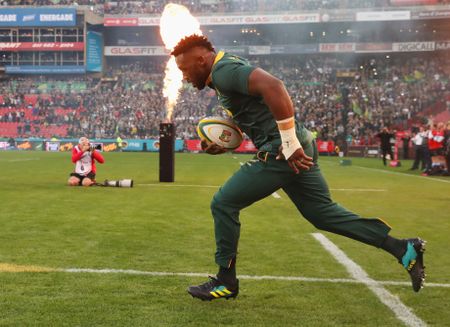
What now for rugby now that PdeV has gone? What of our plans to lead the AU? And why does Julius want a street battle with President Zuma?
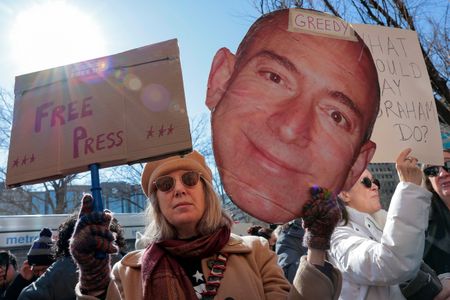
South Africa’s press landscape is untransformed. The Press Code needs work. The Ombudsman should be tougher, more independent, and pro-active. There’s a lot wrong with the local print news sector, but the public protector in her submission to the Press Freedom Commission reminded us all of that is right, and why a free, independent and self-regulating press is the only way forward. By MANDY DE WAAL.
It’s official, Facebook has finally filed for a public stock offering. But does the company’s revenue-generating model justify its expected valuation of $100 billion? Will anybody aside from the investment bankers and industry insiders benefit from the listing? KEVIN BLOOM considers the question.
Ultimately the polls were right. Mitt Romney trounced Newt Gingrich in Florida. Now there are only 46 more states to contest in this grinding battle for the affections of the Republican Party. By J BROOKS SPECTOR.
Pigs, dogs, hyenas, vultures and crocodiles all come home to roost as Cosatu introduces its Corruption Watch. The president’s in the air. With several planes. And just what the heck is going on in the US, why is the Donald angry?
Arguably, by Christopher Hitchens, Atlantic 2011. Review by KAVISH CHETTY.
We all know the ANC and the Press (the capital is deliberate) have had a rough ride together over the years. And we know that there are parts of the ANC that seem to be hell-bent on using its power as the majority in Parliament to make sure the press is brought to heel. Some see it as a deliberate campaign to stop freedom of speech, and to get rid of those pesky front-page exclusives featuring the word "corruption". Others think the ANC has a point. On Tuesday, in front of the Press Freedom Commission's members, the ANC had its say. By STEPHEN GROOTES.
A raging snowstorm, an isolated mansion, a collection of guests who may or may not be who they claim to be. The lights go out. Somebody screams. Ah, there’s nothing like classic Agatha Christie to chill the blood and stir the brain. By LESLEY STONES.
Sunday evening saw political analyst Eusebius McKaiser launch what he claims is a first for South Africa: a talk-show which takes place entirely on Twitter. REBECCA DAVIS took a look at the inaugural Twitterview.
Americans will soon begin to groan under the weight and information overload of politically-charged advertising, broadcast media commercials, Internet-based messages and targeted, automated phone calling in favour of candidates and policies. The superPACs are taking the presidential campaign trail by storm. By J BROOKS SPECTOR.
From creative advertising to neurotic music videos, our eyes and ears are bombarded with lyrical, sugar-coated commercial sounds. Fuelled with performers’ egos and wrapped up in prodigal pictures and packaging, it’s all about production. But rejoice, purists, there may finally be a way back to the essence of things. It’s time to switch off the lights and listen to Ster. By EMILY GAMBADE.
The truth about reality television is that there’s nothing real about it, writes MANDY DE WAAL.
The team who a decade ago transformed South African online banking with 20Twenty are back, this time with an online financial services tool that’s “guaranteed” to save you money. By GREG NICOLSON.
Last week Salman Rushdie cancelled a planned appearance at the Jaipur Literature Festival in the face of reported threats to his life – Indian police could not assure him of their protection. Then on Tuesday, organisers of the festival were forced to drop a video-linked interview with the Indian-born author after a crowd of protesters massed outside the venue. This most recent episode in L’affaire Rushdie dredges up the age-old debates about the limits of freedom of expression, but it also casts fresh scrutiny on the place of Muslims in political life in India. By KHADIJA PATEL.
Yada yada yada yada yada. Talks about talks about talks about talks. So far, the World Economic Forum in Davos, which kicked off on 25 January, seems to be more of the same. Except this time, there really doesn’t seem to be much of a “forum” to speak of—mainly because the “world” part isn’t being bought by the 99%. By KEVIN BLOOM.
Do what you love. Do your best. Money won’t make you happy. Take risks. Use your time wisely. That’s the sage advice Dr Karl Pillemer has accrued after canvassing some 1,500 wise, elderly Americans for his book 30 Lessons for Living. Based on the Cornell Legacy Project he founded, this project flies in the face of the youth cult that’s permeated this century and celebrates the hard won lessons of age. By MANDY DE WAAL.
What was the idea behind the Daso poster showing a naked interracial couple that set the social media abuzz and, with the help of a few online news sites and radio stations, the public in general? It certainly got attention, but did it manage to make a meaningful contribution to race discourse? And what long term effect might this have on the DA, the parent body to Daso? By SIPHO HLONGWANE.
The media have had a field day with the Modimolle murder and rape story, which has eaten up headlines because of the violent and bizarre nature of the crimes. It’s big news but just how much gory detail is in the public interest and should the media be publishing photographs of minors motivated by “the public interest”? MANDY DE WAAL investigates.
Kim Schmitz, aka Kim Dotcom, was until his arrest last week the kingpin of one of the largest piracy networks the Internet has yet seen. But the misdirected “libertarian” hacker group Anonymous supported him anyway. What does this have to do with the two pieces of anti-piracy legislation that have just been shelved by the United States Congress? And how can artists, writers and musicians make a living in the face of a populist call for online anarchy? By KEVIN BLOOM.
There were fears that the Press Freedom Commission hearings, dubbed the "Listening to South Africa Campaign" would result in nothing more than a rehash of the Press Council public hearings that took place in 2011. At the very least, a greater diversity of voices seem to have come to the party. By JULIE REID.
In literary-critical debate, it won’t do to make emphatic statements about uncovering political corruption. In the case of crime fiction, the hot new SA genre in which Roger Smith is writing, hot debates start running the moment anyone takes a stand for the new trend of crime writing – or against it. By LEON DE KOCK.
Here’s the good news: the worst movie of 2012 is now over and done with. Here’s the bad news: that it was ever made in the first place. By RICHARD POPLAK
The damage parents’ bigotry can inflict upon their children is a subject that either raises intense debate or scarcely any thought at all. The weighty issue of what happens when parents dehumanise their children is the powerful dust of Yellowman. By LESLEY STONES.
On Wednesday the National Council of Provinces ad hoc committee on the Protection of State Information Bill released its draft schedule for public hearings on the bill. With 40% of township residents blissfully unaware even of the existence of the bill, the committee has its work cut out to ensure hearings are factual and inclusive. By THERESA MALLINSON.
Okay, so it’s not only the 20th century we’re talking about, but this week sees a milestone many movie directors won’t be celebrating: it’s 100 years since the birth of film criticism. We take a look at a few of the most memorable reviews. By REBECCA DAVIS.
Boekehuis, a well-loved bookstore in Johannesburg, is set to shut its doors this month after Media24 Books, a subsidiary of Naspers, decided the store’s failure to turn a profit could not be sustained any longer. KHADIJA PATEL spoke to manager, Corina van der Spoel, about the store’s legacy.
Many of the young men who served their military conscription were damaged by the experience. Physically and emotionally, they were scarred by the brutal way their superiors treated them, or from the moral abhorrence of killing an enemy because their skin was a different colour. By LESLEY STONES.
What would you say if we told you that a Michael Moore-style documentary, with Indiana heartlanders weeping over lost factories and foreclosed homes, made a villain of Mitt Romney and his former company, Bain? What if I told you the documentary was made by far-right Republicans? By RICHARD POPLAK.
1 2 3 > Last ›