Advice to aspiring diplomats: Don’t hug war criminals, and especially don’t be photographed hugging them. That’s what happened to Ibrahim Gambari, the UN’s man in Darfur, when he ran into Sudan’s President Bashir at a glitzy wedding in Khartoum. But here’s the thing: hugs and socialising are part of diplomacy, and might be what’s needed to keep the faltering peace process going. By SIMON ALLISON.
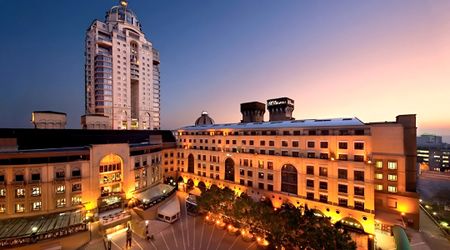
William Gibson, the science fiction writer and coiner of the term 'cyberspace', has long observed that the future isn't really the future, but an elusive slice of the present. Nothing proves his theory more than Addis Ababa. By RICHARD POPLAK.
If this isn’t a sign of how far the USA has fallen, I don’t know what is. Twenty years ago it would have been American workers targeted by rebel groups. But the times they are a-changing, and two kidnappings in the last week suggest China’s increasingly dominant role in the world – and especially Africa – is being recognised. And not in a good way. By SIMON ALLISON.
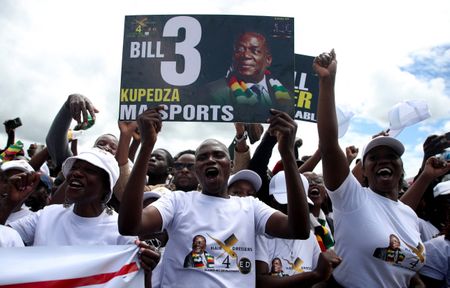
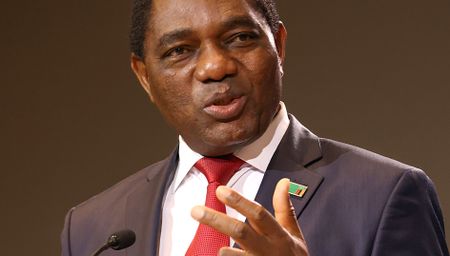
Another of our southern African neighbours is embarking on a round of nationalisation. Don’t be afraid, at least not yet. Unlike Zimbabwe, Zambia’s plan is well thought through and designed to correct the rampant corruption that accompanied the previous administration’s privatisation deals. By SIMON ALLISON.
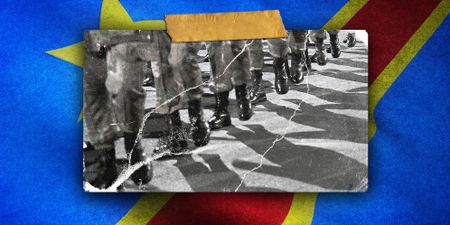
When Vodacom’s business partnership in the Congo fell apart at the seams, and the company’s directors in the DRC were about to land in jail, the mobile giant’s chairman phoned Moto Mabanga, a fixer with firm ANC connections. Mabanga fixed the problem all right, but he and Vodacom had a difference of opinion on a little matter of a multi-million dollar success fee. No problem for Mabanga; he’s managed to get a Kinshasa commercial court to make a $21-million award against Vodacom. Now if only Vodacom would recognise the DRC’s jurisdiction. By MANDY DE WAAL.
As Dlamini-Zuma and Ping slugged it out to head the African Union Commission, Benin’s President Thomas Yayi Boni was quietly chosen as chairman of the AU itself. He’s a decent choice to take on the largely ceremonial role – certainly better than the dictators and autocrats that preceded him. By SIMON ALLISON.
A highly anticipated election for the position of African Union Commission chairperson petered out into a stalemate after four rounds of voting failed to conclusively reveal a winner. But it wasn’t quite a damp squib. Quite the contrary, actually: the election served up all the drama of a World Cup semi-final. By KHADIJA PATEL and SIMON ALLISON.
Rumours wafting out of African Union HQ in Addis Ababa have given Nkosazana Dlamini-Zuma a slight edge over Jean Ping going into the secret ballot on Monday morning. South Africa has reportedly had pledges of support from 35 of the 51 countries eligible to vote. But many leaders have derided South Africa’s ambitions for the AU’s top job as an attempt to reinforce its hegemony over the rest of the continent. By KHADIJA PATEL.
Less than a month before Senegal’s elections, the country’s top court decided who was and wasn’t allowed to run for president. In was incumbent Abdoulaye Wade, term limits be damned; out was singer Youssou N’Dour. Senegalese opposition reacted furiously, but it’s going take a much more coordinated response to unseat Wade. By SIMON ALLISON.
It's not every day that one gets to inaugurate a building with some of the most murderous mofos in the not-so-free world. Welcome, then, to the new African Union headquarters, a very shiny building that came wrapped in a bow. On 28 January, we learned how proud we should be of this wonderful facility. Indeed. It has taken the African art of begging to new heights. By RICHARD POPLAK.
Since the Organisation of African Unity was formed in 1963, most of the gatherings of our pan-African institution—now known as the African Union—have been characterised by empty speeches and grandiloquent (often self-serving) back-slapping. But at the inauguration of the new AU headquarters in Addis Ababa, built for free by the Chinese, one head of state spoke a trenchant truth. KEVIN BLOOM was there to hear it.
In a fit of pique, South Sudan has completely shut down its oil production and announced grand plans to build a new pipeline to Kenya. This is designed to minimise its reliance on Khartoum, but it’s an overly drastic measure which only raises tensions in the already volatile region. By SIMON ALLISON.
Maybe it’s not meant to be arrogant, but that’s how it’s perceived. South Africa’s bid to install Dlamini-Zuma as AU chief will only solidify the negative opinions of South Africa on the continent. The problem is we’re becoming a lot like America – and it’s too late to stop now. By SIMON ALLISON.
It’s a modern-day murder mystery like few others: a dozy policeman, a mysterious companion, strange blue flames and a war hero found dead on his country farm. As the inquest into Solomon Mujuru’s death continues, it’s looking increasingly as if his death was no accident. But who killed him? And why? By SIMON ALLISON.
For the third time in the past 10 years, drought has returned to stalk the Sahel – the arid, western shoulder of Africa. To prevent a repeat of the famine in Somalia last year, aid agencies have warned the region could slip further into crisis if strong action is not taken immediately, but another African food emergency so soon after the Somali crisis may not augur well with donors. By KHADIJA PATEL.
Like most things in life, the Egyptian Revolution produced winners and losers. On the anniversary of its beginning, SIMON ALLISON looks at why the activists are introspective and the military is celebrating.
Angry Libyans can’t believe that four months after Gaddafi’s fall, so much of his autocratic system remains in place. Shouldn’t everything be different now? SIMON ALLISON argues unless Libyans are patient, they risk destroying their chances of a making a real difference.
Kenya just doesn’t seem to get it. Lost in the minutiae of military detail, a Kenyan army colonel claimed they were at the halfway point of their mission to rid Somalia of Al Shabaab. Have they learnt nothing from Afghanistan? Iraq? Vietnam? Weapons don’t win wars any more, and until Kenya and its African allies figure out a political solution, Al Shabaab isn’t going anywhere. By SIMON ALLISON.
Speaking at the opening session of the 18th African Union summit in Addis Ababa on Monday, AU commission chairman Jean Ping said the African Union had, over the past year, taken great steps in “defence of the spirit of democratisation” of Africa. By KHADIJA PATEL.
Madagascar’s exiled president tried to go home on Saturday, only for his plane to be dramatically turned back to OR Tambo in mid-air. Bad news for Madagascar’s fragile peace process, and even worse news for SADC and South African diplomacy, which needs peace in Madagascar to vindicate its repeatedly failed softly-softly approach to conflict resolution. By SIMON ALLISON.
Here’s the good news: the worst movie of 2012 is now over and done with. Here’s the bad news: that it was ever made in the first place. By RICHARD POPLAK
At the height of the 2011 crisis in Côte d’Ivoire an estimated 200,000 men, women and children sought asylum in neighbouring states, while another million people were displaced within the country. Now, as rebuilding resumes, they’re making their way home. Among them, children who found themselves in refugee camps without their parents. By KHADIJA PATEL.
A high-profile panel assembled by the SA government to discuss the Sudans painted a bleak picture of that country’s present and future. The spectre of Somalia was raised, as was the imminent threat of widespread famine. It seems that South Sudan’s independence has been no panacea to the problems in the region, and there aren’t any leaders with the strength or vision to solve the remaining threats. By SIMON ALLISON.
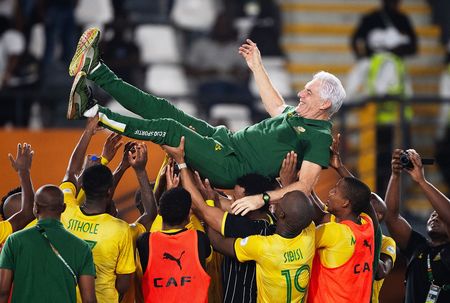
The Africa Cup of Nations kicks off on Saturday, and tourists are descending on hosts Gabon and Equatorial Guinea by the handful. If you are one of the lucky few, here’s a handy travel guide you probably shouldn’t rely on completely. By SIMON ALLISON.
Of course, they said the right things and said them nicely. They talked about African development, integration, security and sustainability. But what the heavyweight five-minister team that formally declared Nkosazana Dlamini-Zuma’s candidature as chief of the African Union Commission was really doing was announcing South Africa’s ambitious plan to seize the leadership of Africa’s future. By SIMON ALLISON.
The African Union backed the wrong horse in Libya. Its name was Gaddafi, and it was a particularly lucrative horse, but now it’s dead and the AU has to deal with a highly unimpressed government in Tripoli. AU Commission chairman Jean Ping was in Libya to try to get relations back on track. By SIMON ALLISON.
A new report by Human Rights Watch investigates Ethiopia’s “villagisation” programme, hailed by the government as a successful voluntary relocation project, but which HRW claims is seeing farmers moved to accommodate foreign land investors. By KHADIJA PATEL.
A frantic week in Nigeria saw the trade unions face down the government and take to the streets. Their nationwide strike cost Nigeria billions in lost revenue and forced a hefty concession. By SIMON ALLISON.
The government of South Sudan has put pen to paper on the first oil contracts to be signed since independence, giving four companies access to the new country’s lucrative oil fields. That these companies all have a distinctly Asian flavour might show that the west doesn’t have as much influence in South Sudan as they’d like to think. By SIMON ALLISON.
The DRC’s Catholic Church issued a stern condemnation of last year’s elections. It’s a welcome position from one of the most influential institutions in the country, but critics think the church didn’t go far enough. By SIMON ALLISON.
1 2 3 > Last ›