



Late last year South Africa ratified the African Union’s Charter for Democracy, Elections and Governance. Seen as a means to address tendencies towards authoritarian rule in Africa, the charter focuses on issues of human rights and the rule of law, democratic elections and unconstitutional changes of government to reinforce commitments to democracy, development and peace throughout Africa.
The rate of adoption of the charter by AU member states has, so far, been abysmal. A mere 37 of the 53 AU member states have signed the charter and of those only nine have ratified it. A day away from local elections, South Africa is a harbinger of democracy on the continent. Few will have qualms about the election being free and fair, but warnings of an even lower turnout than local elections usually receive signals a tepid enthusiasm for democracy. Disgruntled communities throughout the country complain of being disconnected from the decision-making that entails local government, and this lack of participation of communities in their local government signals a crisis in democracy in South Africa.
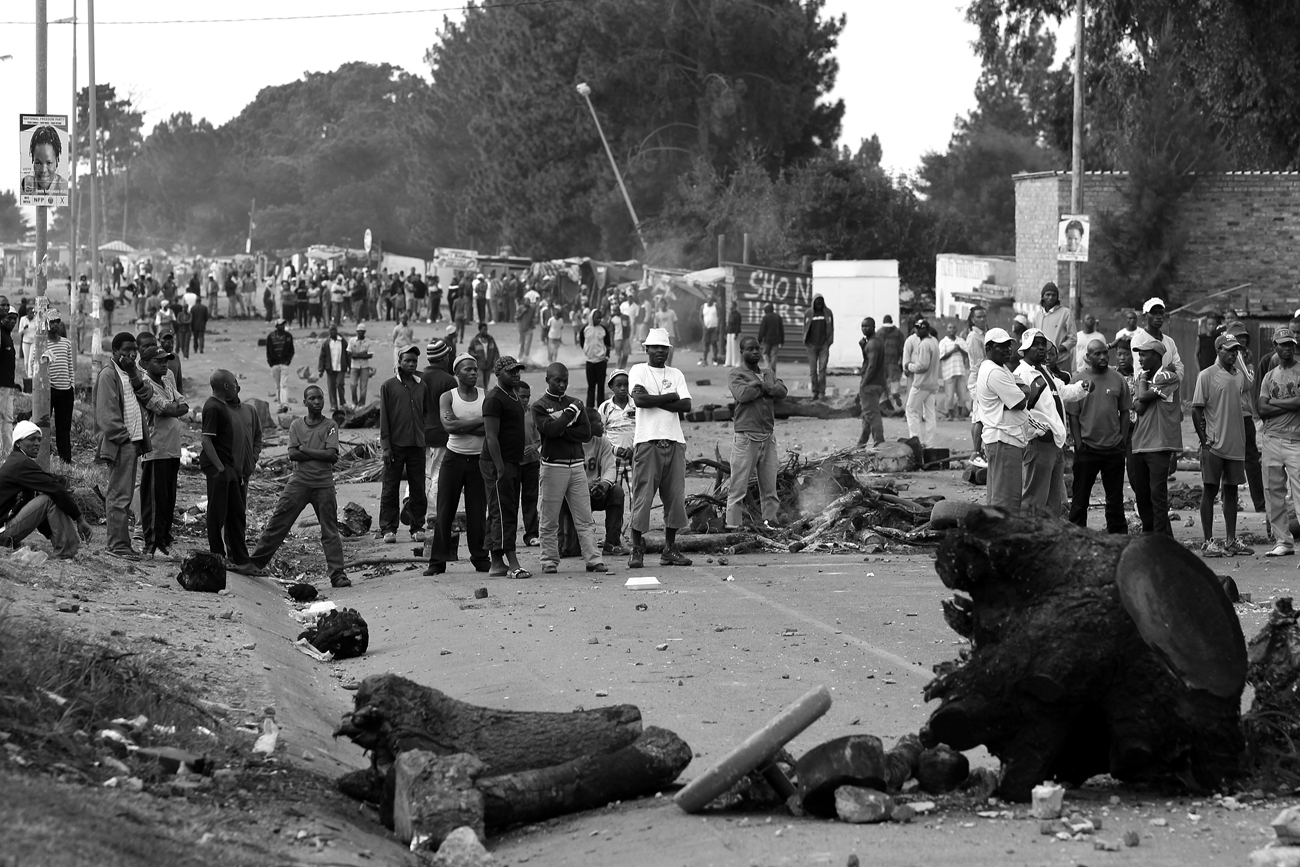
According to the Local Government Municipal Systems Act of 2000, municipalities are required to “develop a culture of municipal governance that complements formal representative government with a system of participatory governance”. Public participation in government entails principally involving people in deciding their futures. But instead of this legislation imbuing local governments with a culture of public participation, communities have become frustrated with the non-delivery local services and protests have become a mainstay of life in some part of South Africa.
Speaking to the Sunday Times over the weekend, President Zuma announced that his “door-to-door electioneering in some of the country’s poorest communities over the past three months had exposed an ugly side of South Africa that government officials did not mention in their service delivery reports to him”. Effectively confessing to an ANC leadership severely out of touch with its core grassroots support base, Zuma’s comments expose the inaccessibility of local government structures to aggrieved communities.
When service delivery protests first raised their ignominious head, government pointed to the ward committee system in local government structures as platforms for voters to hold their councillors in check. According to the government, ward committees, if used to their full potential would deliver voters from feeling their concerns were being ignored. The director of the Study of Democracy, Stephen Friedman, however, disagrees. “Ward committees,” Friedman says, “offer no voice at all to most voters. They are either chosen by the councillor or elected at small meetings, which only a few voters attend.” Speaking at the University of Johannesburg earlier this month, Yunus Carrim, deputy minister of cooperative governance and traditional affairs agreed that ward committees “are often dominated by political party activists, sometimes almost becoming adjuncts to party structures or sites of contestation between political factions, instead of representing the diversity of civil society interests in the ward community that they are meant to.” While Carrim takes the view that, “communities do not use the space for community participation effectively or (not) at all”, he fails to illustrate exactly how communities could improve engagement in the ward committee system he describes as “hamstrung by the lack of administrative support, resources and training of its members”.
Carrim has tasked ward committees to be more inventive in the way they engage their communities, but these committees says Friedman are only “beholden to those who choose them - the councillor or a small group of connected people, or both”. It’s a view even Carrim endorses when he cautions against “romanticising” public engagement in local government saying “communities are far from immune from[sic] capture by elites who primarily represent their own narrow interests”. Although minister of cooperative governance and traditional affairs, Sicelo Shiceka, floated the idea of ward committees that were “directly elected by residents” in 2009, Carrim feels, “Consideration needs to be given to amending the legislation to ensure that ward committees do not comprise political party activists, but represent a range of civil society interests, including residents, ratepayers, business, trade union, womens, youth, taxi, sport and cultural organisations”.
Ultimately he stops short of suggesting legislation that requires ward committees to be directly elected by residents. Friedman believes if ward committees were directly elected, “there would be far more of an incentive for them to listen to residents and convey their views to councils”.
While Carrim rightly points out that the law allows for an “incremental, experiential” expansion of the role of ward committees in local government, public policy analyst, Ebrahim-Khalil Hassen argues that, while “the laws governing municipal governments in South Africa provide the basis for experiments in deepening democracy, there are no such experiments in South Africa in the sense of being exemplars of participatory democracy. South Africa is in fact out of tune with important experiments in local democracy that are happening across the globe. The gap between legislative frameworks and implementation,” Hassen cautions, “needs to be carefully evaluated.”
If public participation in local government remains restricted to ward committees in their current forms local government will continue to be out of touch with the concerns of voters, and it may well take another round of electioneering – and several more years of frustration - for the powers that be to realise the sound reasons behind communities being as fed up as they are with their local governments. DM
Photo: Township residents stand near barricades during protests over the lack of housing, electricity and sanitary water supplies in Zandspruit, north of Johannesburg April 26, 2011. Police used rubber bullets to disperse the crowd and 16 people were arrested for public violence, according to local media reports. REUTERS/Siphiwe Sibeko