The great global swine flu swindle

Two separate, but equally damning reports published in Europe, show the World Health Organisation may have created unnecessary panic about swine flu, and wasted vast sums of public money by declaring a pandemic, driving governments to stockpile drugs.

This seems to have happened while failing to disclose that the scientists who drafted WHO’s drug stockpiling guidelines had been on the payroll of huge pharmaceutical companies – setting it up to face a credibility crisis dubbed “the greatest medical scandal of the century”.

An investigative report by the British Medical Journal has revealed that “key scientists advising the World Health Organisation on planning for an influenza pandemic had done paid work for pharmaceutical firms that stood to gain from the guidance they were preparing”. The BMJ says WHO neglected to make these conflicts public and the UN’s health organisation fudged criticism and questions about its handling of the swine flu “pandemic” labelling these as little more than “conspiracy theories”.

The BMJ investigation reveals that the WHO’s guidelines for stockpiling swine flu drugs were drafted by a trio of scientists who had worked for and received payment from Roche and GlaxoSmithKline. The three had lectured, done consulting work or received sponsorship from Roche and GSK. WHO failed to make any mention of this when it was advising governments to stockpile pharmaceutical drugs, despite the fact that the scientists declared their conflict of interests to WHO.

The BMJ asked whether the pharmaceutical companies that had invested some £2.8 billion to develop a swine flu vaccine had insiders inside an emergency committee that put pressure on the WHO to declare a pandemic. It was WHO’s declaration that there was a pandemic that led to governments flocking in droves to secure drug contracts with pharmaceutical companies.

Watch: H1N1 Flu Scandal Exposed by Channel 4 News

If that isn’t bad enough, another report, this time by the Parliamentary Assembly of the Council of Europe (Pace) revealed, “overwhelming evidence that the seriousness of the pandemic was vastly overrated by WHO”. The Pace report adds weight to the BMJ allegation that WHO’s advice to governments could have been tainted by pharmaceutical industry influence.

"Some of the outcomes of the pandemic, as illustrated in this report, have been dramatic: distortion of priorities of public health services all over Europe, waste of huge sums of public money, provocation of unjustified fear among Europeans, creation of health risks through vaccines and medications which might not have been sufficiently tested before being authorised in fast-track procedures, are all examples of these outcomes,” the Pace report reads.

The Guardian reports that on the advice of WHO, Britain geared up for some 65,000 deaths and signed contracts with pharmaceutical companies for drugs and vaccines to the tune of £1 billion. In the final analysis the UK experienced fewer than 500 deaths and health authorities have been left desperately trying to back out of drug contracts to recoup funds.

The pharmaceutical companies, on the other hand, are laughing all the way to the bank. London analysts say that greedy pharmaceutical companies could have banked as much as £4.8bn as global governments went into panic mode and started stockpiling vaccines and other drugs in an attempt to stave off what was thought to be an imminent global swine flu epidemic.

With governments counting the cost of this flawed advice and WHO desperately trying to save face, Pace’s Paul Flynn is calling the A/H1N1 crisis “a pandemic that never really was”.

“There is not much doubt that this was an exaggeration on stilts. They vastly over-stated the danger on bad science and the national governments were in a position where they had to take action,” said Flynn. “In Britain, we have spent at least £1 billion on preparations, to the detriment of other parts of the health system. The tentacles of drug company influence are in all levels in the decision-making process. This is a monumental failure on the WHO's part.”

The most dangerous aspect of this story is the “cry wolf” phenomenon. Given the battering WHO’s credibility has taken, will governments listen to the UN health organisation as readily next time – when there’s a real a global health crisis? Whether they do or not, there will be an exacting cost that once again will be borne by ordinary taxpaying citizens while pharmaceutical companies do what they do best – harvest ill-gotten profits.

By Mandy de Waal

Read the BMJ’s investigative report “Conflicts of Interest - WHO and the pandemic flu ‘conspiracies’.” Read the PACE report “The handling of the H1N1 pandemic: more transparency needed” Read Paul Flynn’s blog “Swine flu foul up”.

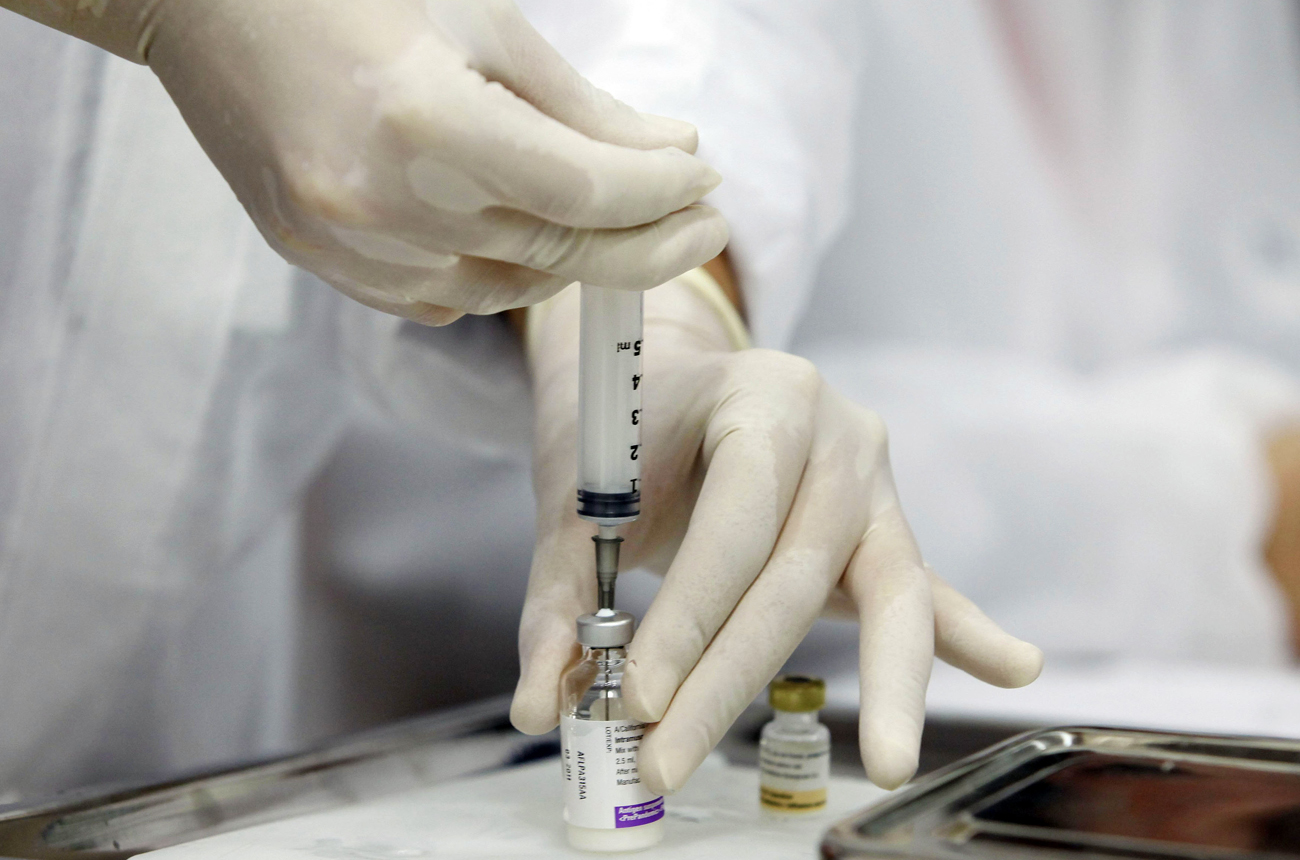
Main photo: A medical assistant prepares a H1N1 flu shot at the Health Ministry in Algiers December 29, 2009. Algeria starts a vaccination programme for workers considered most at risk on Wednesday. REUTERS/Louafi Larbi

Tuesday 8 June, 2010
 
Top Stories

You must be logged in to leave a comment. Please login or sign up.
I hate to say I told you so, but pure instinct told me this was a scam looong before this news broke. Common sense tells me that flu vaccines are a shot in the dark (ha ha, ok sorry) at best; flu is horrible always but dangerous generally to the infirm only. Think I even wrote a something about it over a year ago.
Now let's look into the great antidepressants scam, too. But first I need a handful of pills to get my day started...
Following from Donovan's comment ("dangerous to the infirm only"), it's troubling that many of the infirm seem to not be able to get their hands on vaccines. Chatting to a Doc the other day, he observed that he couldn't get vaccines for any of his patients, as the available stock was all being kept back by government for World Cup dignitaries/players, etc.
Yep, first SARS, then Bird Flu and then Swine Flu...the world is always almost being decimated by dreadful diseases, which turn out to have lower mortality rates than the flu.
Statistically you have more chance of being struck by lightning than catching bird flu.
The role of the Bush administration in this whole Big Pharm area needs to be well aired, particularly the Rumsfeld connection.

In general we do not have Health Services, but disease treatment services geared to the use of, while not addictive pharmaceuticals, stuff that generates a dependency.

If the cash wasted making Big Pharm (branching out into Big Farm through genetic engineering) rich beyond the dreams of avarice, were spent in disease prevention through better diets, better living spaces, better provision of clean water and air, we would all feel a lot better.
To give some background numbers to the Rumsfeld connection and to demonstrate just how much moolah Big Pharm con us out of on a regular basis:

Donald Rumsfeld, late of the Dubya Administration is the Chair of Gilead Sciences Inc - pharmaceutical manufacturers. Gilead have the patent rights on Tamiflu - allegedly the only cure for swine flu.

Dubya authorised $1.4Bn to fight swine flu - 14% went to Gilead.

The USA ordered 25Million doses of the vaccine at $80 per dose and 65 other governments have ordered another 200Million doses at $70.

Rumsfeld personally gets 10% of every dose sold.

816 people are known to have died world-wide of Swine flu. 35,000 Americans die of ordinary flu complications each year.

Big Pharm - you gotta luv 'em.
These numbers are pretty specific. This sort of thing is in line with other things the Bush administration did. Just curious about the source of info for Rumsfelds' postition and percent return, as well as the timing of his appointment. Was it a reward after the contract or while he was working there? You can read my comment above about my feelings about this.
Perhaps it was scaremongering on the WHO's part, but can you imagine the ramifications if the situation escalated to the gravity of the 1918 Spanish Flu pandemic which claimed the lives of 50 million people and there was a shortage of medicine to solve the problem - who would we be pointing fingers at then?
As a virologist and having worked for four biopharmaceutical companies like Gilead as a medicinal chemist designing and making proto-drugs, I understand the panic of potential pandemic (but didn't bother to get a shot). Unlike many, I see many of the significant costs associated with the development of a drug (though the advertising budgets make me a little sick), and so don't really listen to people complain that these are rip-off companies. A drug on the market costs at least a billion dollars, and is the result of untold but necessary failures as part of the process. But the issue of a UN organization ignoring industry connections regarding research and the ties of the obviously questionable ethics of a Bush Defense Secretary being Chairman of the Board (Iain Robertson on Tue, 8 Jun 2010 at 10:02) of a biotech profiting blow me out of the water. How common corruption and ineptitude (apparently expected of, say, SA government)can creep into Science in such a mind-bogglingly large way really shakes me up. This one surly gets a prize and is big news.
Wait a minute.
A United Nations agency worked hand in glove to make a Bush administration man rich?
And because silly people believe this so should we? I'd rather go outside and count the UFOs.
@Nyiko, better get your binoculars and abacus out.

Rumsfeld was appointed Gilead Chairman in January 1997. He had been a board member since 1988. (www.gilead.com/wt/sec/pr_933190157), and the CEO/Board member of other pharm companies prior to that.

The UK Daily Mail, hardly a leftie journal said in 2009:

"Mr Rumsfeld has previously been accused of a potential conflict of interest over his links to Gilead Sciences, which sold the licensing rights for the medicine to Swiss giant Hoffman-La Roche in 1996.

Under the terms of the deal Gilead, headed by Mr Rumsfeld between 1997 and 2001, still receives between 14 and 22 per cent of the income from the wholesale trade in the drug, depending on the volume of sales.

Four years ago the value of Mr Rumsfeld’s shares in Gilead Sciences saw a huge hike from an estimated £3million to an estimated £17million over the avian flu scare.

Read more: http://www.dailymail.co.uk/news/article-1176743/Donald-Rumsfelds-controversial-links-drug-company-Tamiflu.html#ixzz0qL5zFR9q"

Money does make the world go round, eh ?

Read even more at http://money.cnn.com/2005/10/31/news/newsmakers/fortune_rumsfeld/

You can also try wikipedia. Even Snopes admits this is not an urban legend.

PLease wear a wooly hat. It gets cold in the evenings as you scan the sky for UFOs.

Or were you just pulling our wire ?
The UN connection to Roche is in the above article, though not mentioned in your refs or elsewhere that I can find. Thank you for this detailed info, this is quite a scam. I can understand the above skepticism about UN/Bush connection, as he appointed an ambassador to the UN that publicly stated the UN acted against US interests and was 'inefficient' (corrupt?) and advocated substantial cuts in UN funding. Gilead itself receives around 10% of profits, so Rumsfelds 10% must have come before Hoffman-LaRoche take over. Be nice to see how close Roche really was to the UN.
Anyone who has never read Arthur Hailey's "Strong Medicine", with an interest in the procedures (and capital outlay) involved with bringing a new drug to market, should do so. For every success story there are thousands of failures.
@Darrel, the question to my mind is not a financial one, but an ethical one. As you say it takes a great deal of time and money and failure to bring a drug to market, and the costs of doing so need to be recouped. Pharmaceutical companies are not charities. Decidedly so.

However, the ethics of Big Pharm in promoting dependency on their products (Prozac for example) and in manipulating the medical profession into prescribing their products where they are unnecessary or ineffective (using antobiotics to treat viral infections) are at best questionable.

Rumsfeld's positioning as head of a Big Pharm company, and his reach in the International establishment at the same time as the disposal of loadascash to address a potential problem does raise questions. To-date they have not been answered. Sometimes its not coincidence.
Most corporations are greedy. The costs of producing a drug are enormous and only undertaken at great risk and generally publicly unrecognized cost because of the reward factor. Big Pharma is looking at biotechs like Gilead because their own pipe-lines are drying up as patent coverage ends, and it is costing them too much to develop their own drugs. I believe broad- spectrum antibiotics are commonly prescribed for potential viral infections (the symptoms are often the same), because it takes time to culture viruses, so there is no quick diagnosis for them (not to mention there are few antivirals). No doctor would proscribe an antibiotic for a known viral infection unless it was proven to have an effect, which is highly unlikely, but easily searchable.
Also, the doctors don't really make much money from prescriptions. One should look at the advertising of drugs, for example in the U.S., (that takes place now recently with minimal regulation)in the media directly to the public, asking them to press their doctors to proscribe. The amounts of money spent on this is staggering.