Opinionistas

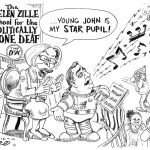
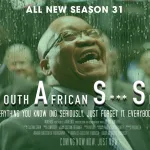
So much has been said about the DASO poster there’s little to add, except to congratulate the organisation on an effective campaign and to tease some of its more sincere supporters. By PAUL BERKOWITZ.

Forget all the emotive arguments for and against self-regulation of the media. The numbers alone paint a clear picture: 70% of the top 50 countries in the Reporters Without Borders and Freedom House press-freedom rankings practice self-regulation.

More by Julie Reid

When it was announced that Alan Knott-Craig is to be the next CEO of Cell C, we were all somewhat bemused. Not that the owners of Cell C had made a bad decision. Quite opposite.

It’s easy to forget that arguments in favour of unfettered free speech often come from positions of privilege. Such privilege could be economic, social, intellectual or educational, but whatever its origin, the result can be bewilderment at the thought that anybody could find mere words offensive enough to censure.

The furore over the rather trivial matter of a pay-TV adult offering reminds us that old-fashioned patriarchal moralists didn't die with the National Party. Now Cosatu is leading the charge.

More by Ivo Vegter
Folks, we’re in denial about how fat we are, say the experts. But I think the real story may be a little more nuanced than a straightforward denial and has more to do with our nation’s particular views on body image and stigma.
We know of no other species in the Universe with the capacity to hold diametrically opposite views in fragile harmony than ourselves. At times it appears almost as if it’s a precondition of being “human” to hold the Yin and Yang of life in balance. So it is with the perennially explosive issue of abortion.

I admit, I stole that headline from a news article about a Swedish professor of delusional idiocy who spoke in Cape Town this weekend. It seemed too outrageous to pass up. It is not the most alarming claim the prof made, but it is worthy of study.

More by Ivo Vegter

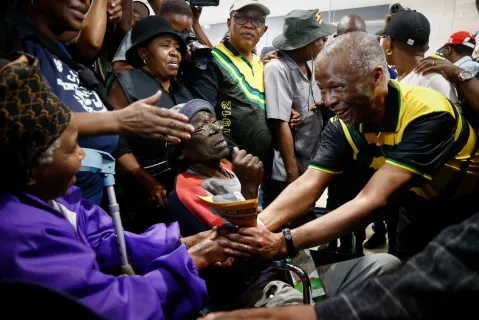
Former president Thabo Mbeki is not making a political comeback. The evidence to support such claims just does not exist. But even if one applies one’s mind to the idea, it doesn’t wash. The sad fact is that there is going to be more – not less – of these speculations in a year when the African National Congress, the Democratic Alliance, Cosatu and the South African Communist Party all hold elections for leaders.

South Africa post-democracy bears an uncanny resemblance to many scenarios in post-apocalyptic fiction. Massive existential shake-up? Check, apartheid’s spectacular collapse. Survivors rebuilding and trying to find ways of living in a much-changed world? Check. A cast of would-be heroes, actual heroes, anti-heroes and villains? Check, check, check and check. So it might not be unreasonable to think these fictional accounts of the future might cast some much-needed perspective on where we are. 

The ANC’s centenary celebrations were marked by another instance of an uncomfortable collision of cultural norms in the ritual slaughter of a bull. But is cultural habit a sufficient justification for such rituals?

The first few days of 2012 have seen much-needed conversations about race and the nature of racism. Unfortunately, these debates have also been marred by a particular defensiveness and a failed attempt to understand, never mind empathise with, the experiences of racism put forward by non-white South Africans.

A new bill before Parliament will effectively outlaw weather information that is not provided by the state-owned SA Weather Service. Warn someone that a storm is brewing, and you could go to jail for many years, or pay millions in fines. Has the government gone mad?

More by Ivo Vegter

South Africa’s history of race relations can be puzzling for a foreigner. Dazed and confused, I spent the holidays asking what colour I was, has apartheid been internalised and do you really want me as a roommate?

You’ll be hearing a lot about the ANC’s need to return to its roots. I see a straight line from its intellectual founders to its high-living leaders today.

Helen Zille and Simphiwe Dana are at each others’ throats again. Dana alleges that Cape Town is a “racist city” and demands that the DA clean up the town. But is it really so bad?

Last year’s global accolades were not enough to spare Cape Town an ignominy it has so far been unable to shake off. A trend on Twitter in South Africa, #CapeTownIsRacist annoyed Western Cape Premier Helen Zille and many other (mostly white, I suggest) Cape Town residents. What’s Africa’s “little Europe” got to do to catch a break on this perennial bugbear?

Trade in endangered species, unlicenced guns, hard drugs, illegal oil refineries, forced prostitution, gambling without paying off the government – all of these are banned. So why are they so common, and so profitable? When will it dawn on those who claim to oppose this, that or the other, that bans quite simply do not work?

More by Ivo Vegter